
Understanding Excavator Load Limits and Machine Stability
Understanding Excavator Load Limits and Machine Stability
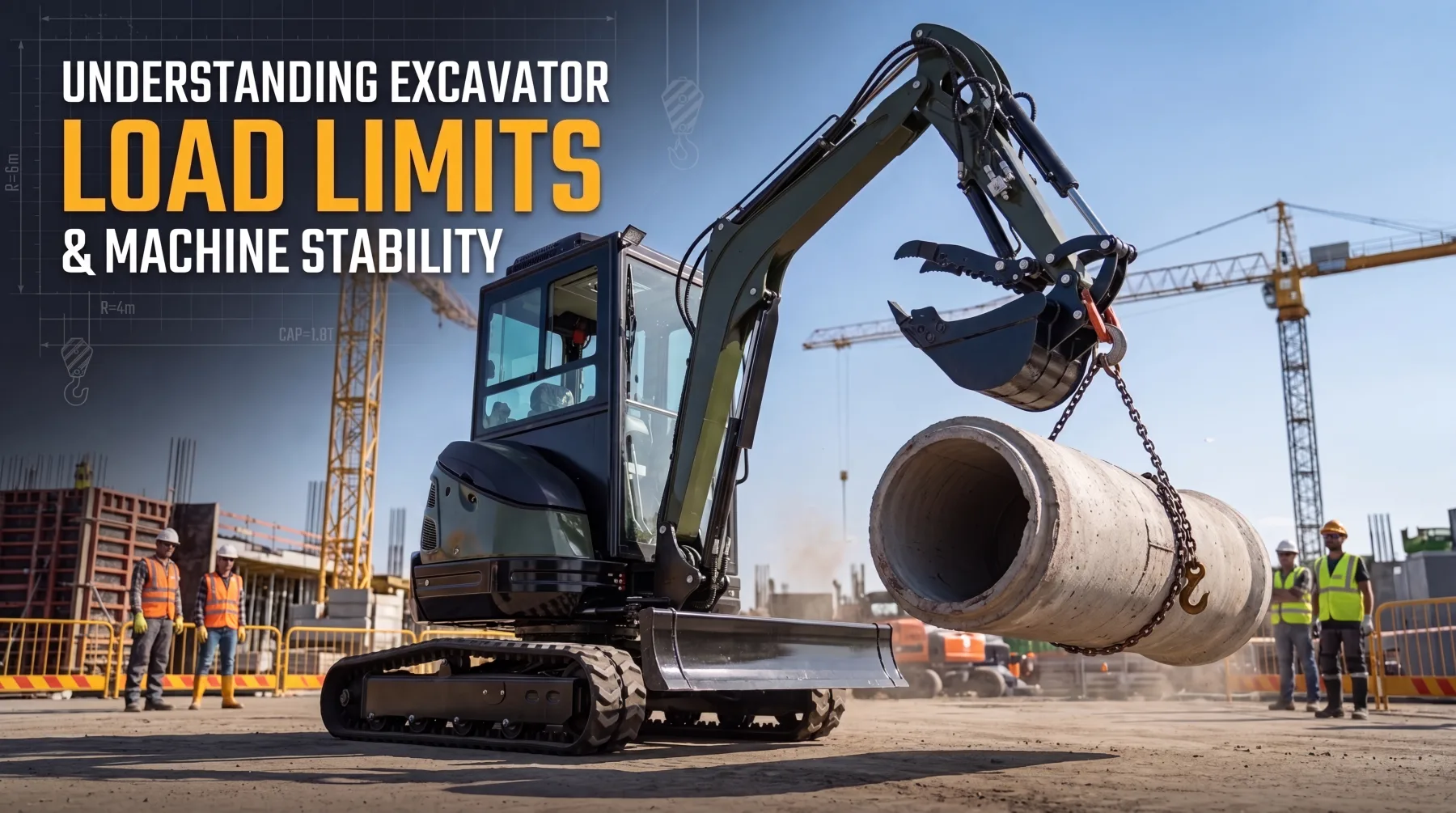
An excavator can dig, lift, and place heavy materials with impressive precision, but every machine has a point beyond which safe operation ends and serious risk begins. Load limits and stability define that boundary, and understanding them is what separates confident, productive operation from costly accidents. Push a machine past its rated capacity or ignore the conditions that keep it balanced, and you invite tip-overs, dropped loads, and expensive damage. This guide walks you through why load limits matter, the factors that shape lifting capacity, how stability actually works, how to choose the right machine for your lifting needs, and the common mistakes that undermine safety. By the end, you will know how to lift heavy loads with the control and confidence the job demands.
Why Excavator Load Limits Matter
Load limits exist to keep both people and equipment safe, and respecting them is the foundation of responsible excavator operation. Every excavator carries a rated lifting capacity determined by the manufacturer through careful engineering, and that figure represents the maximum weight the machine can handle safely under defined conditions. Treating this limit as a firm boundary rather than a loose suggestion is what prevents the most serious incidents on any job site. When you operate within the rated capacity, the machine performs as designed, stays balanced, and delivers the reliable results your work depends on. The most immediate reason load limits matter is the prevention of overloading. Asking an excavator to lift more than it was built to handle upsets its balance and dramatically raises the risk of a tip-over, which can injure the operator, endanger nearby workers, and destroy the load itself. Overloading also strains the machine in ways that shorten its working life. The hydraulic system, boom, arm, and structural components all bear enormous stress during a lift, and exceeding safe limits accelerates wear, causes premature failures, and leads to expensive repairs. Staying within load limits protects your operation in several clear ways: Accident prevention by keeping the machine stable and reducing tip-over risk. Component protection for the hydraulics, boom, arm, and undercarriage that bear lifting stress. Load security so heavy materials are placed safely rather than dropped. Long-term reliability that keeps the excavator productive and lowers ownership costs. When operators understand that load limits are engineered safeguards rather than obstacles to productivity, they make smarter decisions on every lift. Respecting these limits keeps the job site safe, preserves the equipment you have invested in, and ensures the machine remains dependable for years of demanding work.
Factors That Affect Excavator Lifting Capacity
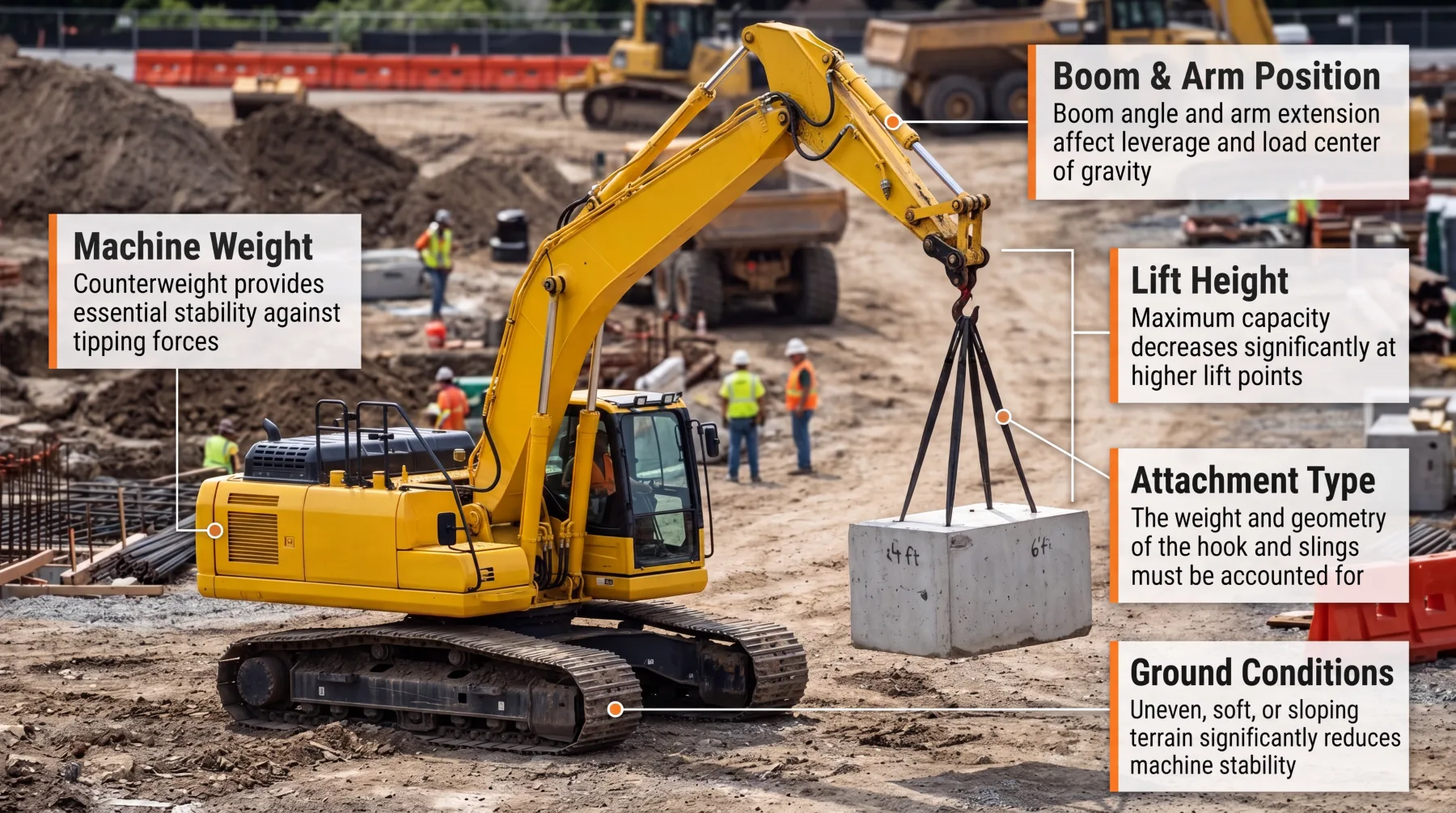
An excavator’s rated capacity is not a single fixed number that applies everywhere, because several factors change what the machine can actually lift in the moment. The most fundamental is the machine’s own weight, which provides the counterbalance that keeps it stable during a lift. A heavier excavator generally lifts more safely, since its mass resists the forward pull of a load. This is why lifting capacity always ties back to the machine’s overall design and weight distribution rather than to engine power alone. Boom position and lift height play an equally important role, and they often surprise operators new to lifting work. As the boom and arm extend outward, the load moves farther from the machine’s center, increasing leverage against it and reducing the weight that can be safely handled. A load that is manageable close to the machine can become dangerous when reached out at full extension. Lift height affects balance too, since raising a load high changes the center of gravity and can lower safe capacity. Several key factors combine to determine real-world lifting performance: Machine weight provides the counterbalance that supports stable lifting. Boom and arm position change leverage; reaching farther out reduces capacity sharply. Lift height affects balance and the safe weight the machine can carry. Attachment type adds weight and shifts the load center, lowering effective capacity. Ground conditions influence stability, as soft or uneven surfaces reduce safe lifting. Attachments deserve particular attention, since a heavier bucket, grapple, or specialized tool adds weight and moves the load center forward, cutting into the capacity available for the load itself. Ground conditions tie everything together, because even a properly loaded machine can become unstable on soft, sloped, or uneven terrain. Evaluating all of these factors together gives you an honest picture of what the excavator can lift safely, rather than relying on a best-case rating that assumes ideal conditions.
How Excavator Stability Works During Lifting
Stability is what keeps an excavator planted and balanced when it handles heavy loads, and it comes from a combination of design features and operator skill. The undercarriage forms the foundation. Track width and length give the machine its footprint, and a wider, longer track base creates a broader, more stable platform that resists tipping. When lifting, this footprint matters enormously, since it determines how far the machine can shift its load before balance is lost. Operators who understand their machine’s footprint make better decisions about where and how to lift. Counterweight design is the next pillar of stability. Mounted at the rear of the machine, the counterweight offsets the weight of the load carried at the front, keeping the excavator balanced during a lift. The heavier and better-positioned the counterweight, the more the machine can lift before the rear begins to lighten and stability erodes. This works hand in hand with the machine’s center of gravity, which shifts as the boom extends, the load rises, and the house rotates. Keeping the center of gravity low and close to the machine’s base is the key to safe, stable lifting. Operating technique brings these design elements together in practice. Even a well-built machine can become unstable if handled carelessly, so operators should keep loads close to the machine, move slowly and smoothly, and avoid sudden swings or abrupt stops that shift momentum. Lifting over the front or rear, where the tracks provide the widest support, is generally more stable than lifting over the side. Positioning the machine on firm, level ground before a lift gives the tracks and counterweight the solid base they need. When track width, counterweight, center of gravity, and disciplined technique all work together, the excavator handles heavy loads with the steady, controlled balance that keeps every lift safe and predictable.
Choosing the Right Excavator for Your Lifting Requirements
Selecting the right excavator for lifting work starts with an honest assessment of the loads you handle and the conditions you work in. A machine sized correctly for your tasks lifts your heaviest routine loads safely, reaches where the work happens, and keeps operating costs in proportion to the job. One that is undersized will strain at its limits and slow your progress, while an oversized machine costs more to buy, run, and transport than your work requires. The goal is a sensible match between the excavator’s capabilities and your genuine daily demands. Begin with the weight of the materials you lift most often, and pay close attention to your heaviest regular loads rather than the average, since those define the capacity you truly need. Working range matters just as much, because a machine must reach the required distance and height while still lifting safely at full extension. Remember that capacity drops as the boom reaches out, so a machine that handles a load close in may fall short at the reach your work demands. Keep these considerations in mind as you compare machines: Material weight should sit comfortably within the machine’s rated capacity, with margin to spare. Working range must cover the reach and lift height your jobs require, not just close-in lifting. Jobsite conditions such as access, space, and ground firmness influence the ideal machine size. Required attachments add weight and reduce capacity, so the machine must support them and still lift your loads. Matching machine size to these requirements is what drives both safety and productivity. An excavator that handles your heaviest loads at the reaches you actually use, fits your sites, and runs the attachments your work demands will outperform a poorly matched machine every time. Take the time to assess your lifting needs accurately, and you will invest in equipment that delivers safe, efficient, dependable performance.
Common Mistakes That Reduce Excavator Stability
Even skilled operators can fall into habits that quietly undermine stability, and recognizing these mistakes is the first step toward avoiding them. The most serious error is lifting beyond the rated capacity. Whether from misjudging a load’s weight or ignoring the reduced capacity that comes with a distant reach or high lift, overloading pushes the machine toward the tipping point. The temptation to move one heavy load rather than two safe ones is understandable, but it is never worth the risk to the operator, the crew, or the equipment. Working on uneven or unstable ground is another frequent and dangerous mistake. An excavator that is perfectly stable on firm, level ground can become precarious on a slope, soft soil, or a surface hiding holes and debris. Combined with a heavy load, poor footing sharply increases the risk of a tip-over. Improper load positioning compounds the danger further, since lifting over the side rather than the front or rear, or carrying a load too far from the machine, shifts the center of gravity into unstable territory. Avoiding these problems comes down to consistent, disciplined practice. Keep these guidelines front of mind on every lift: Never exceed rated capacity, and account for reach and lift height, which lower the safe limit. Work on firm, level ground, taking time to prepare or level the surface before lifting. Keep loads close and centered, lifting over the tracks where support is strongest. Move smoothly and deliberately, avoiding sudden swings, stops, or jerky movements. Following proper operating practices is what separates safe, productive lifting from preventable accidents. These habits are not complicated, but they demand attention and respect for the machine’s limits every single time. Build them into your daily routine, and you improve safety on the job site, protect your crew, and extend the working life of the equipment your operation depends on.
Conclusion
Understanding excavator load limits and machine stability is essential to safe, productive lifting, and it goes far beyond reading a single capacity number. Load limits protect your people, your equipment, and your loads by preventing the overloading that leads to tip-overs and premature wear. Factors like machine weight, boom position, lift height, attachments, and ground conditions all shape what an excavator can truly handle, while track width, counterweight design, a low center of gravity, and disciplined technique keep the machine balanced under load. Choosing the right excavator for your materials, working range, and conditions sets your operation up for success, and avoiding common mistakes like overloading and lifting on uneven ground keeps every job safe. Respect the machine’s limits, prepare each lift carefully, and operate with control, and your excavator will deliver the dependable, safe performance your work demands for years to come.
