
The Difference Between Static and Vibratory Rollers
The Difference Between Static and Vibratory Rollers
The success of any paving or earthmoving project depends entirely on achieving perfect structural density. Long before the first vehicles travel across a new stretch of highway, the foundation and surface layers must be engineered to withstand decades of relentless mechanical stress. When contractors approach a new job site, one of the most critical decisions they make is selecting the appropriate heavy equipment to achieve these demanding engineering standards. Assuming that any heavy drum will successfully compact the ground is a costly miscalculation that frequently leads to severe structural failures.
Understanding the difference between static and vibratory rollers is essential for protecting your profit margins and delivering uncompromising quality. While both machines share a similar physical appearance, their internal mechanics and primary applications are fundamentally different. Choosing the wrong equipment can result in poor material density, destroyed asphalt, and massive project delays. This comprehensive guide explores exactly how these two road roller types operate. By mastering the core principles of vibratory compaction and static roller uses, you will empower your contracting business to improve road quality, elevate job site efficiency, and maximize your equipment return on investment.
The Core Mechanics of Heavy Compaction
Every construction professional understands that loose soil, gravel, and freshly poured asphalt contain microscopic air voids. If these materials are left uncompacted, the immense weight of commercial traffic will eventually force the ground to settle, causing the rigid asphalt above to crack and deteriorate. The immediate operational challenge is determining the most effective method to force these jagged aggregate particles to lock tightly together. The machinery you deploy must overcome the natural friction of the material to eliminate those hidden air pockets.
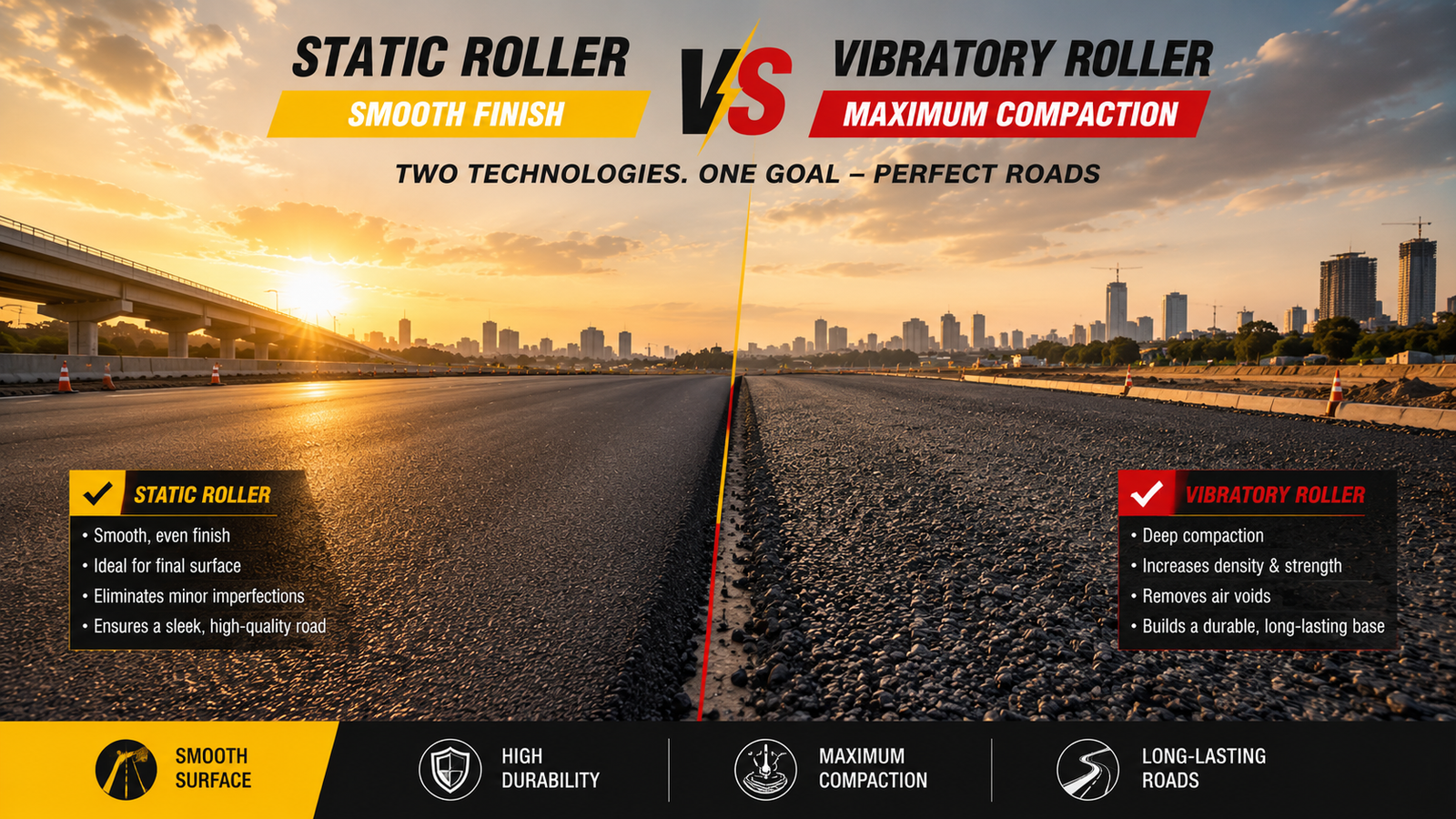
The fundamental difference between these two machines lies entirely in how they generate their compressive force. Static rollers rely on machine weight alone to compact material. As the heavy steel drums roll across the surface, they apply massive, uninterrupted downward static pressure. In contrast, vibratory rollers utilize both the machine’s static drum weight and intense mechanical vibration. Inside the drum of a vibratory roller, rapidly spinning eccentric weights generate dynamic striking forces that travel deep into the ground.
The real-world impact of this mechanical difference is profound. The addition of dynamic vibration completely changes how the earth reacts to the machine, affecting compaction depth, operational speed, and overall effectiveness across different types of soil, gravel, and asphalt. Understanding exactly how this dynamic energy alters the ground beneath it is the first step in maximizing your heavy equipment fleet.
Mastering Depth With Vibratory Compaction
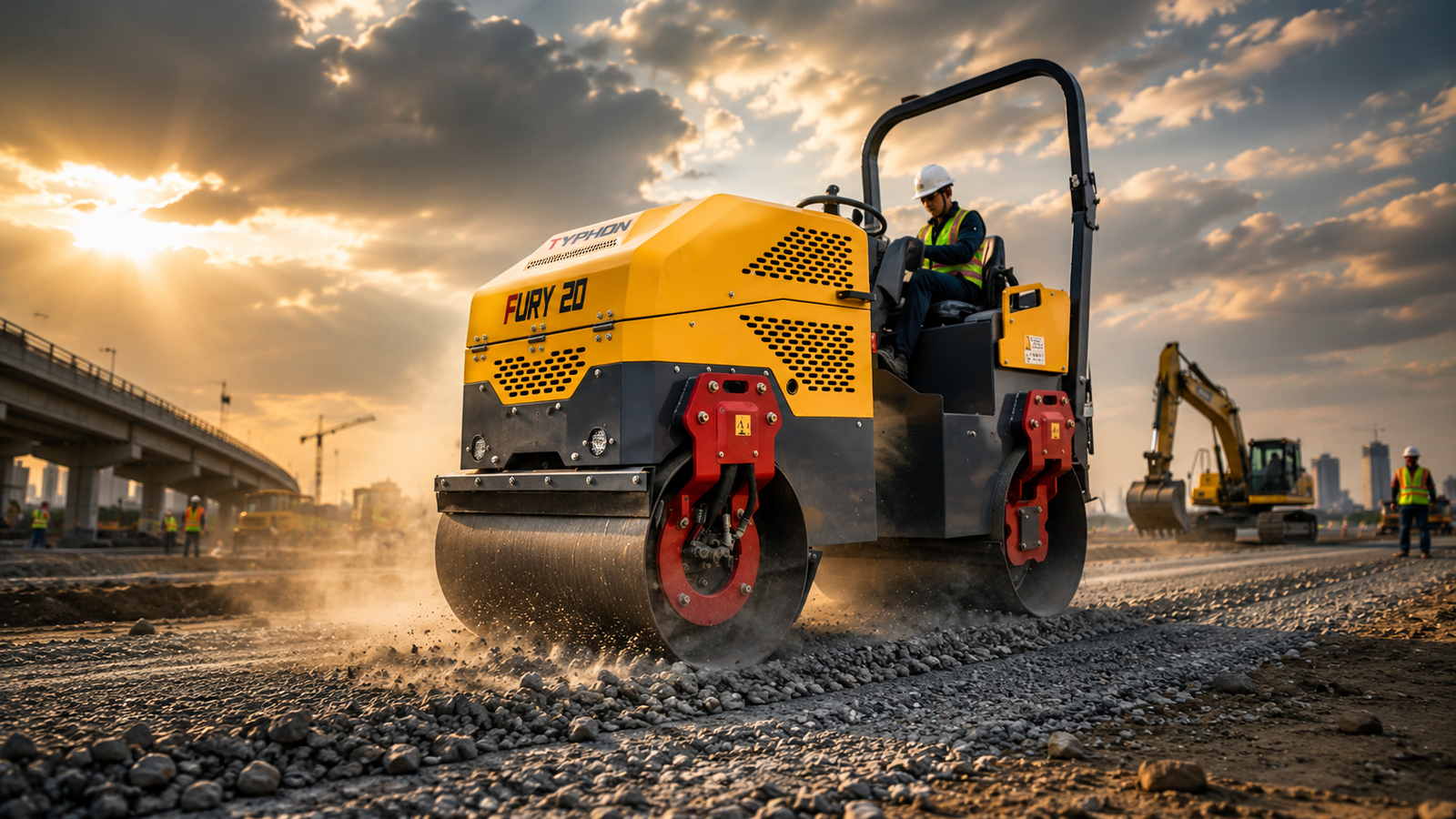
When a paving crew is tasked with building a deep, load-bearing foundation, relying exclusively on static weight presents a severe limitation. Gravitational pressure only penetrates the top few inches of the material being rolled. If you attempt to compact a thick lift of base gravel using only static weight, the bottom layers remain completely loose and unstable. This hidden weak point will eventually cause the entire road to fail, forcing your company to handle expensive warranty repairs. Attempting to compensate by working in incredibly thin layers destroys your daily production schedule and burns unnecessary fuel.
Vibratory compaction provides the definitive solution for establishing deep structural integrity. The dynamic vibration generated by the drum briefly breaks the natural friction between the aggregate particles. As the ground aggressively shakes, the particles rapidly slide into the tightest possible formation, eliminating air voids far beneath the surface. This advanced mechanical action allows vibratory rollers to achieve deep, uniform density in a fraction of the time. They are widely considered the ideal machines for high productivity on granular soils, crushed stone, and thick foundational base layers.
Deploying vibratory rollers drastically accelerates your project timelines. Your operators achieve target density with fewer controlled passes, allowing the entire paving train to advance aggressively ahead of schedule. You capture massive savings on your daily operating overhead while delivering a highly durable infrastructure asset. While vibration is incredibly powerful for base layers, there are specific environments where this aggressive energy becomes a severe liability.
The Strategic Value of Static Roller Uses
Despite the immense power of vibratory technology, static rollers remain an absolutely vital component of any professional paving fleet. The aggressive shaking that successfully compacts deep gravel can be highly destructive when applied to the wrong materials or in sensitive locations. When paving asphalt, aggressive vibration on a thin surface mat can actually shatter the aggregate and fracture the bitumen, completely destroying the smooth, sealed finish you are trying to achieve. Furthermore, operating a vibratory machine in dense urban areas creates ground shockwaves that can rattle nearby buildings and crack residential foundations.
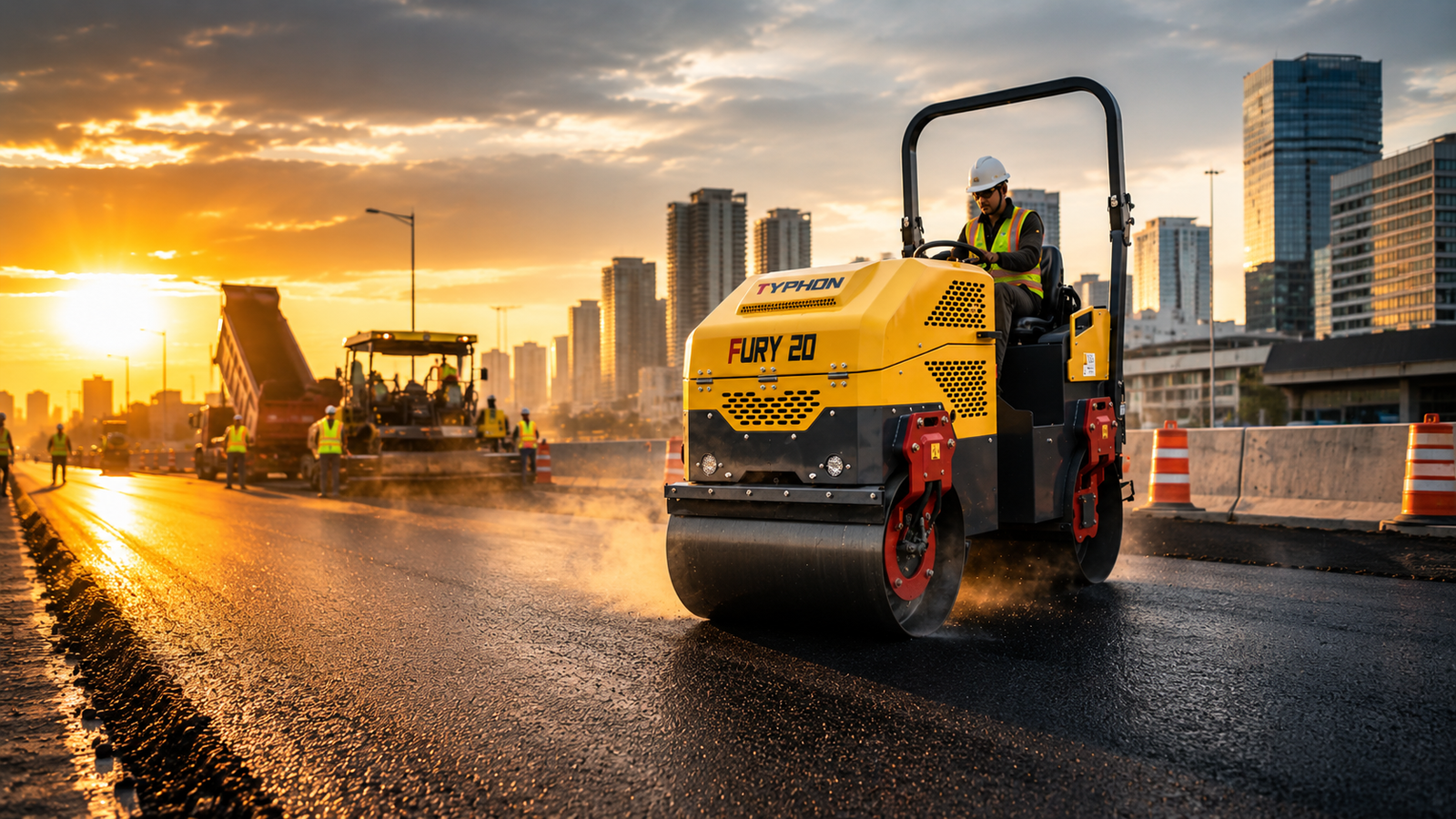
Static roller uses are defined by their ability to provide smooth, heavy pressure without the destructive side effects of ground vibration. These machines are often better suited for the final finishing passes on hot-mix asphalt. After the breakdown roller establishes the initial density, the static roller glides across the pavement to iron out drum marks and seal the surface, creating that flawless, glass-like finish clients expect. Additionally, static rollers are the mandatory choice for situations where vibration could damage surrounding structures, such as paving directly over delicate underground utilities or working adjacent to historic bridges and sensitive municipal architecture.
By utilizing static pressure strategically, you deeply protect your company against expensive collateral damage claims and municipal fines. Your crews maintain complete control over the final aesthetics of the roadway, ensuring the pavement cures perfectly and looks exceptionally professional. Guaranteeing this level of perfection requires project managers to continuously
The High Cost of Incorrect Equipment Selection
The construction industry is an unforgiving environment where poor decisions instantly erode profit margins. The persistent danger on the job site is a lack of communication between project managers and equipment operators regarding material specifications. If an operator mistakenly leaves the vibration engaged during a final asphalt finishing pass, they will draw the liquid bitumen to the surface and cause severe pavement flushing. Conversely, if an operator forgets to activate the vibration on a deep lift of structural clay, the foundation will inevitably fail municipal density testing.
Choosing the wrong roller can lead to a cascade of expensive operational failures. Improper equipment selection guarantees poor structural density, severe material damage, and massively wasted fuel. When a municipal inspector fails your compaction test, your crew is forced to rip out the defective material, re-grade the base, and start the entire process over. This extensive rework completely destroys your project schedule, frustrates your clients, and severely damages your reputation as a reliable infrastructure professional.
Avoiding these devastating scenarios requires strict operational discipline and comprehensive operator training. You optimize your machine’s fuel consumption and preserve your working capital by ensuring the right drum hits the ground at the exact right moment. You build a powerful reputation as a meticulous contractor who delivers uncompromising quality on the very first attempt. Executing this flawless performance requires a systematic approach to project evaluation.
Evaluating Project Variables for Ultimate Success
Achieving perfect structural density does not happen by accident; it is the direct result of applying precise physics to a carefully analyzed environment. The challenge for business owners is navigating the complex variables of every unique contract. A highway expansion project requires a completely different approach than a commercial parking lot or a residential subdivision. Relying on guesswork or outdated habits guarantees inconsistent results across your portfolio.
Contractors must actively evaluate material type, lift thickness, project environment, and precise compaction targets before selecting their equipment. Granular soils and thick lifts demand the deep-penetrating power of heavy vibratory machines to lock the base together. Thin asphalt overlays and urban environments require the smooth, controlled weight of a static roller. Business owners must also factor in the moisture content of the soil and the ambient temperature of the paving environment, ensuring their operators understand exactly when to activate or disable the vibration functions.
Take a highly strategic look at your current equipment fleet and demand absolute excellence from your earthmoving and paving operations. By partnering with trusted equipment experts and understanding the critical differences between these powerful machines, you guarantee that your company deploys the most effective solutions possible. Invest confidently in your compaction strategy, and build a fiercely capable contracting business that delivers unyielding reliability to every single customer.
