
Step-by-Step Asphalt Compaction Process
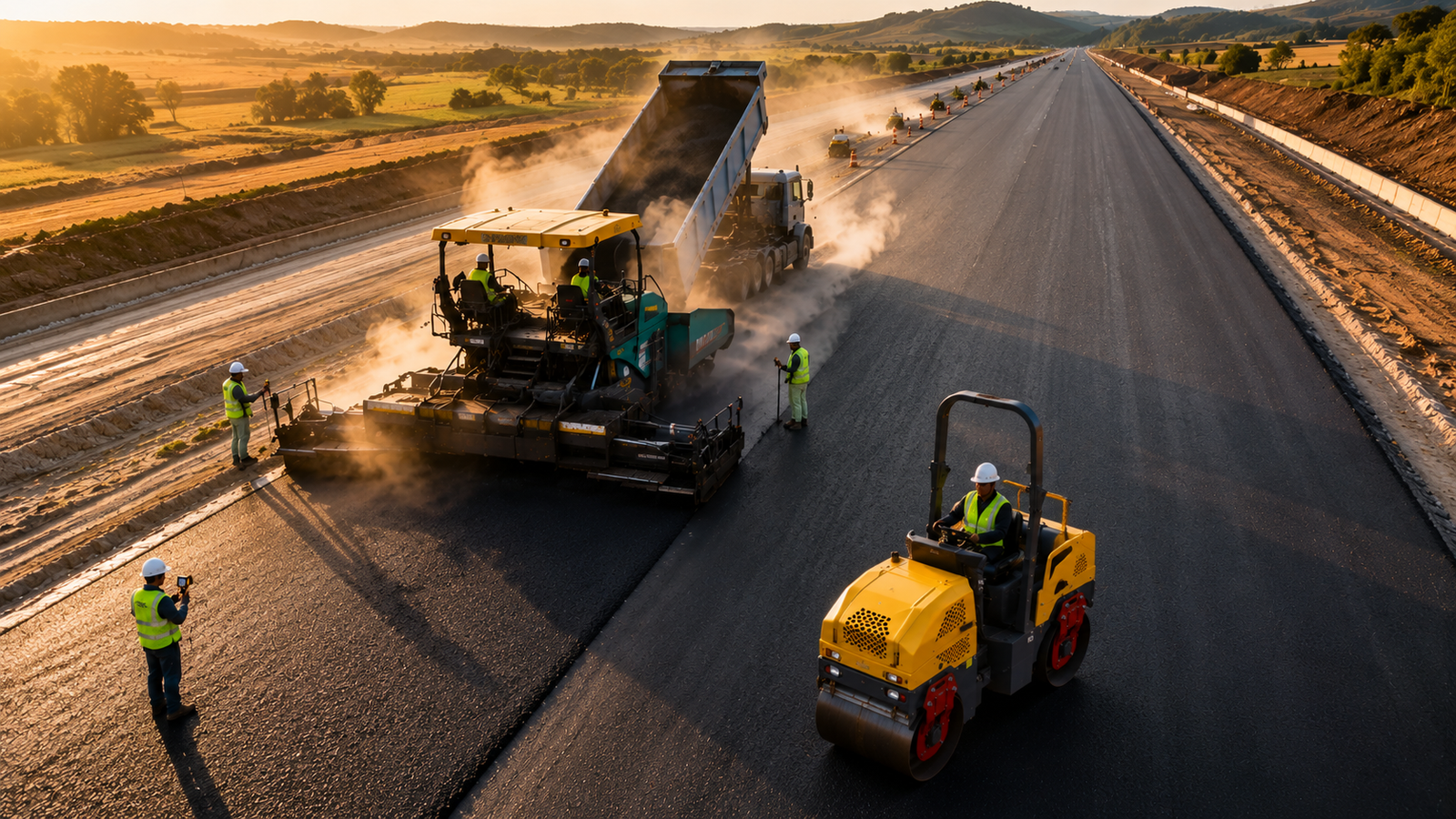
Delivering a flawless asphalt surface requires managing a complex intersection of heavy machinery, precise timing, and demanding material science. When clients invest heavy capital into highway infrastructure, commercial parking lots, or municipal roadways, they expect a pavement that will withstand decades of punishing traffic and harsh weather. Earning and keeping their trust means providing a final product that exceeds basic engineering specifications. However, the ultimate durability of any asphalt pavement is completely decided during the fleeting minutes immediately following the paving machine. Compaction is the decisive engineering process that transforms loose, hot asphalt mix into a dense, impenetrable monolith. Approaching this critical phase with a disciplined, step-by-step methodology separates premier paving contractors from the rest of the industry. This comprehensive guide outlines the exact, sequential process for achieving flawless asphalt compaction. By mastering these foundational stages, you will consistently deliver superior ride quality, protect your operational profit margins, and establish your business as a trusted industry authority.
Mastering Mat Preparation and Temperature Management
The compaction process actually begins the very second the hot mix asphalt leaves the screed of the paving machine. Freshly laid asphalt is an incredibly time-sensitive material whose physical ability to be compacted relies entirely on its internal thermal energy. The asphalt binder acts as a heavy lubricant when hot, allowing the crushed aggregate to slide tightly together under mechanical force. Understanding how environmental variables affect this heat loss is the critical foundation of any successful paving operation.
Contractors frequently face the severe limitation of a rapidly closing temperature window. If a paving crew ignores ambient air temperatures, ground temperatures, or chilling winds, the asphalt mat will cool much faster than anticipated. Attempting to compact a mat that has dropped below its minimum working temperature, known as the cessation point, forces the heavy roller to crush the aggregate rather than consolidate it. This immediately shatters the structural integrity of the pavement, leaving microscopic fractures throughout the surface. Conversely, rolling the mix when it remains dangerously hot causes the material to shove and tear violently under the steel drum, ruining the smoothness of the road before the job is even finished.
The solution requires absolute discipline regarding temperature management and constant communication between the paving operator and the roller operators. Supervisors must utilize infrared thermometers or thermal imaging cameras to monitor the temperature of the mat continuously. The breakdown roller must engage the asphalt while it remains within its optimal compaction zone, which typically falls between 275 and 300 degrees Fahrenheit, depending entirely on the specific mix design. Crews must adjust their paving speed and sequence dynamically to ensure the rollers never fall behind the cooling curve.
Executing flawless temperature management delivers a massive, immediate impact on pavement longevity and operational efficiency. When the asphalt is rolled at the perfect temperature, the material easily yields to the compaction equipment, allowing operators to achieve target density in significantly fewer passes. This reduces the mechanical wear on your expensive fleet, slashes daily fuel consumption, and completely eliminates the devastating costs associated with tearing up and replacing a fractured, over-cooled mat. Capitalizing on this optimal temperature window perfectly transitions the crew into the heavy lifting of the initial compaction phase.
Executing the Breakdown Rolling Phase
With the temperature precisely monitored, the heavy compaction sequence officially begins with the breakdown rolling phase. This initial stage is the most critical mechanical intervention in the entire paving process, responsible for achieving the vast majority of the required structural density. The breakdown roller closely follows the paver, harnessing the maximum heat of the fresh mat to force the loose aggregate particles into a tightly interlocked matrix.
A pervasive problem on fast-paced job sites occurs when operators utilize incorrect vibratory settings or mismatch their equipment during this initial phase. If an operator sets the roller’s amplitude too high for a thin lift of asphalt, the heavy steel drum will literally bounce off the hard base layer beneath, violently fracturing the fragile new pavement. Alternatively, relying purely on static weight without vibration fails to agitate the material sufficiently, leaving massive air voids deep within the core of the asphalt. These hidden voids become destructive water traps that guarantee rapid pavement failure during the first seasonal freeze.
The definitive solution involves deploying a heavy tandem vibratory roller configured with the exact frequency and amplitude settings demanded by the specific lift thickness. For standard asphalt lifts, operators must select a high-frequency, low-amplitude setting. This provides a rapid, gentle tapping motion that fluidly vibrates the aggregate into place without shattering the stones. The breakdown roller must maintain a slow, deliberate speed—typically walking pace—to allow the dynamic vibratory forces enough time to transfer deeply into the hot mix.
Perfecting the breakdown phase secures exceptional density and guarantees a highly reliable product for your client. Achieving roughly 75 to 85 percent of the required density right behind the paver establishes a rock-solid foundation that easily supports heavy commercial traffic. For the construction business owner, getting this phase right eliminates frantic, last-minute attempts to squeeze density out of a cooling mat. This controlled, predictable operational flow naturally sets the stage for the crucial sealing process that immediately follows.
The Intermediate Rolling Stage
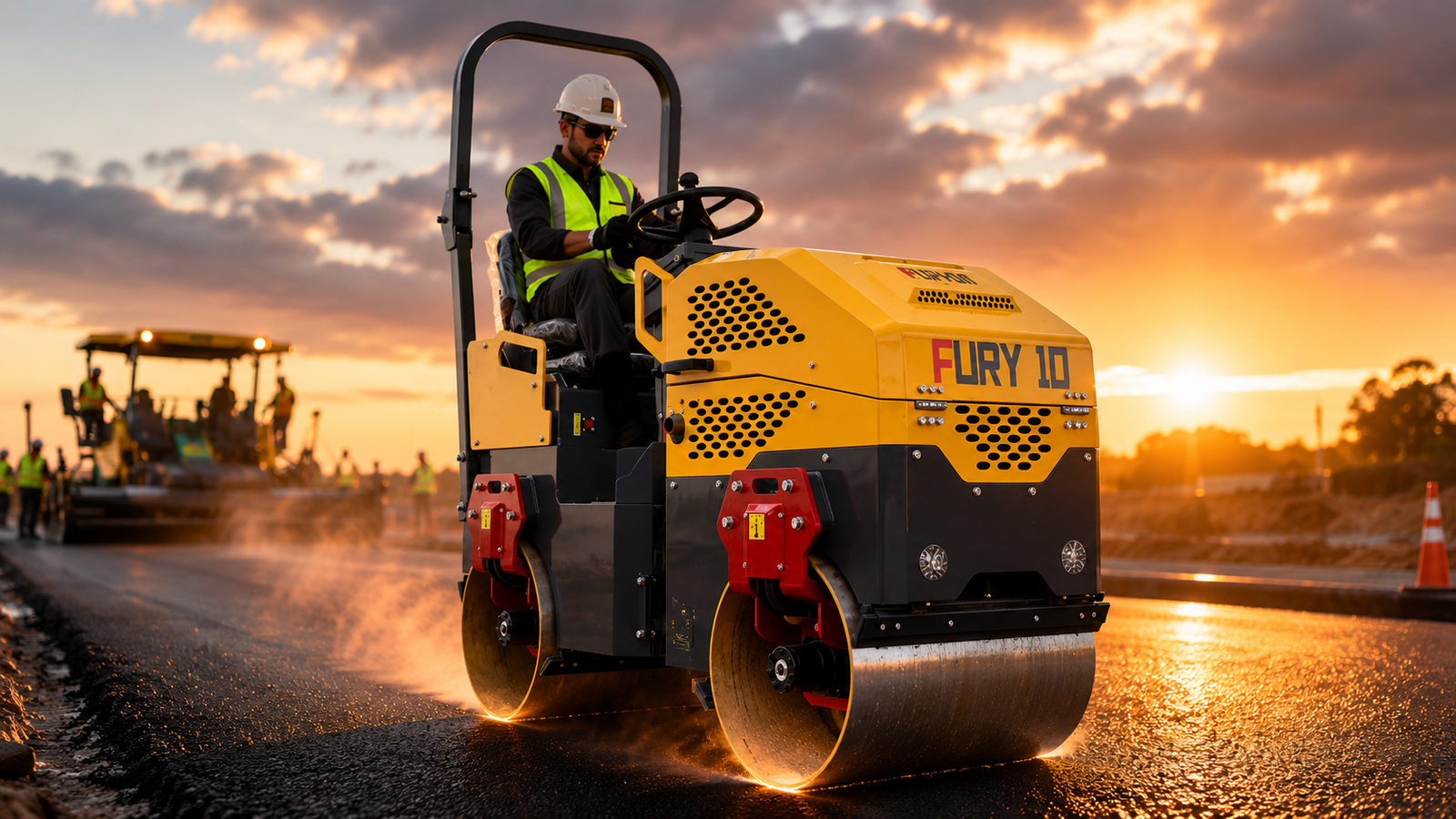
Once the breakdown roller has established the primary structural density, the asphalt mat requires secondary conditioning to close the surface and increase its impermeability. As the breakdown machine finishes its passes, the temperature of the asphalt begins to steadily drop, changing the physical properties of the binder. The intermediate rolling stage takes advantage of this specific, warm temperature zone to further consolidate the material and heal any microscopic surface tears left by the initial vibratory passes.
Contractors who attempt to skip the intermediate phase or rely solely on steel drum rollers severely limit the lifespan of the resulting pavement. Steel drums bridge across the highest points of the aggregate, which often leaves the surrounding surface open and porous. If the asphalt surface remains porous, rainwater will effortlessly penetrate the pavement, rapidly eroding the base layer and creating massive potholes. A pavement structure that allows water infiltration represents a massive failure in quality control and severely damages a contractor’s reputation for reliability.
Professional crews solve this issue by introducing a pneumatic tire roller for the intermediate compaction phase. Unlike rigid steel drums, the heavy, staggered rubber tires of a pneumatic roller physically knead the warm asphalt. This unique massaging action forces the aggregate together laterally, driving the heavy asphalt binder upward to seal the surface tightly. Operators must keep the rubber tires hot to prevent the sticky asphalt from adhering to them, often utilizing heat retention skirts and ensuring continuous operation immediately behind the breakdown roller.
Integrating a dedicated intermediate rolling phase drastically improves the water resistance and overall pavement longevity of your project. A tightly sealed surface heavily resists the destructive forces of oxidation, chemical spills, and severe weather, offering your clients a remarkably durable infrastructure investment. By reducing future maintenance liabilities and preventing premature water damage, you cement your company’s status as a top-tier service provider. Achieving this tight seal across the entire roadway requires strict adherence to driving patterns.
Establishing Disciplined Rolling Patterns
Asphalt compaction is an intensely cumulative process, demanding that every square inch of the paving lane receives an absolutely uniform amount of compressive energy. Highway lanes and commercial parking lots are significantly wider than the drum of a single roller, necessitating multiple side-by-side passes to cover the entire work zone. The strategic movement of the machinery across the hot mat dictates the final smoothness and structural uniformity of the project.
A major liability arises when roller operators execute erratic, random driving patterns across the fresh asphalt. When an operator simply drives back and forth without a structured plan, they inevitably overlap certain strips too many times while completely missing others. This creates severe inconsistencies in the pavement density, leading to localized weak spots that will quickly rut under traffic. Furthermore, stopping abruptly or turning the steering wheel sharply while parked on the hot mat pushes the asphalt into deep transverse ridges, utterly destroying the ride quality of the finished road.
Operators eliminate these defects by executing highly structured, disciplined rolling patterns throughout every phase of compaction. The industry standard mandates that rolling must always begin at the lowest elevation of the road’s transverse slope and systematically progress upward toward the high side or the crown. This technique prevents the heavy machinery from pushing the loose, hot asphalt downhill. Operators must ensure a consistent overlap of roughly six inches on every successive pass to guarantee complete, uniform coverage. When reversing direction, the operator must steer slightly into the previously compacted, cooler lane, gently easing to a stop to prevent indenting the fresh mat.
Implementing these precise patterns dramatically improves ride quality and significantly boosts job site safety. Uniform coverage guarantees that core density tests will consistently pass municipal specifications, allowing the project to proceed smoothly without administrative delays. A structured, predictable approach also enhances work zone safety, as ground personnel and other equipment operators always know exactly where the heavy rollers will move next. With the density secured and the surface sealed, the crew shifts its focus to final aesthetics.
Perfecting the Finish Rolling Phase
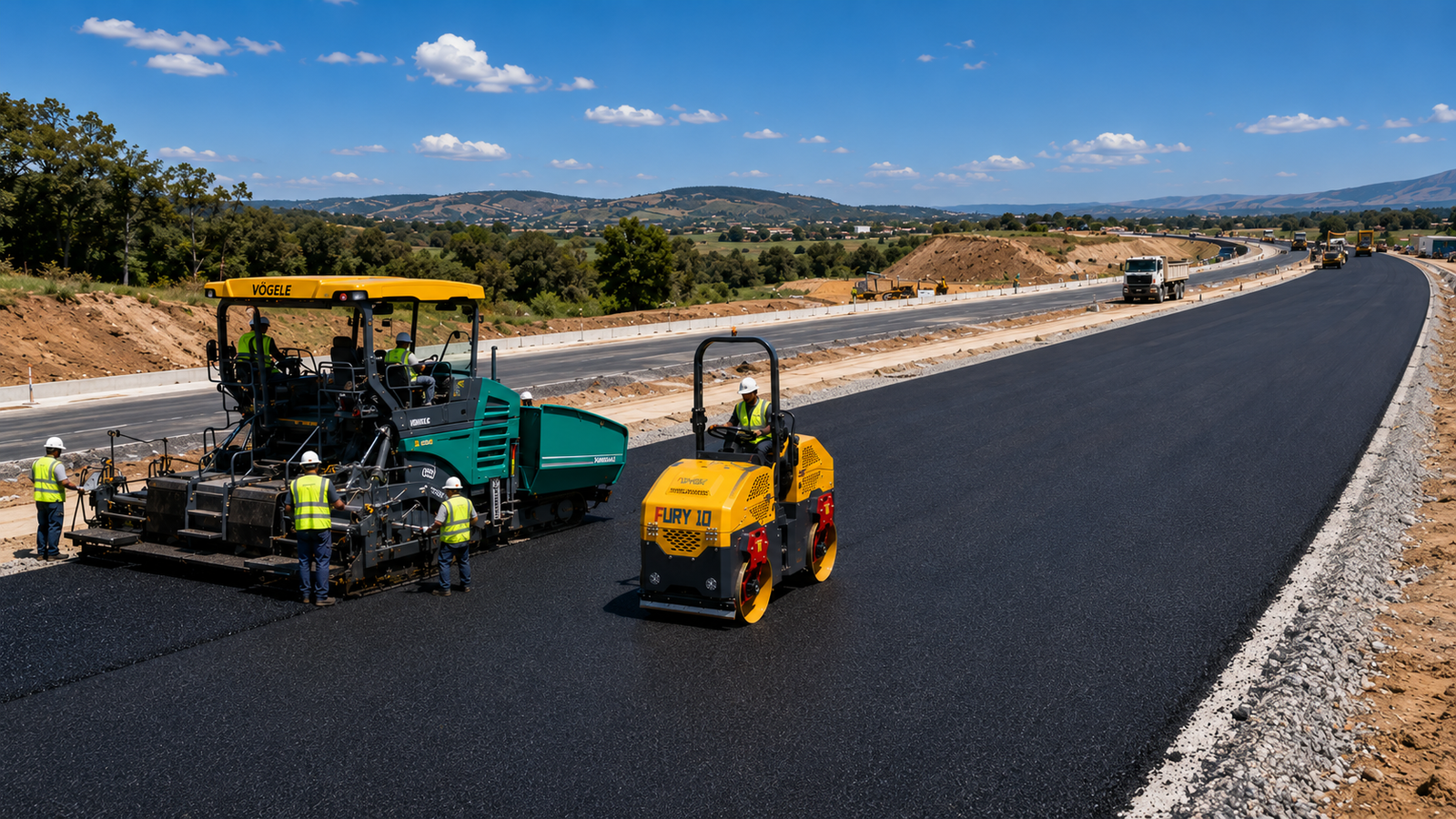
The final mechanical intervention in the asphalt paving process focuses exclusively on aesthetics and ride smoothness. By the time the intermediate roller completes its passes, the asphalt has cooled significantly, approaching its final cessation temperature. While the structural density is already locked in, the surface often retains minor tire marks, slight ridges, or superficial blemishes from the heavy kneading of the previous stages. The finish rolling phase serves as the critical polishing step that delivers the premium appearance clients expect.
Attempting to finish the asphalt while it is too hot, or applying aggressive vibration during this final phase, creates disastrous limitations. If an operator activates the vibratory system on a cooling mat, the drum will shatter the aggregate and fracture the hardened surface, instantly destroying the structural integrity achieved during the breakdown phase. Conversely, if the operator waits too long and the mat is entirely cold, the finish roller simply bounces over the hard surface, failing to iron out any of the existing tire marks or ridges.
The solution requires deploying a static steel drum roller exactly as the asphalt temperature enters the optimal finishing zone, typically between 150 and 175 degrees Fahrenheit. The operator must run the machine in a strictly static mode, utilizing only the heavy, smooth weight of the steel drum to gently iron the surface flat. This process effortlessly erases the pneumatic tire marks and smooths out any minor longitudinal seams left behind by the breakdown passes, leaving behind a pristine, glass-like finish.
Perfecting the finish rolling phase delivers a massive return on investment by directly satisfying the customer’s visual expectations. While clients cannot see the underlying structural density, they immediately judge the quality of your work by the smoothness of the ride and the flawless appearance of the surface. Delivering a pristine, mark-free pavement heavily boosts your company’s curb appeal and brand prestige, making it vastly easier to secure lucrative future contracts. Validating this aesthetic perfection with hard engineering data represents the final step of the paving operation.
Enforcing Quality Verification and Density Testing
The transition from active paving to project handover requires definitive, undeniable proof that the newly compacted asphalt meets all required engineering specifications. Modern commercial and municipal contracts enforce incredibly strict density requirements, demanding that contractors verify their work before any final payments are released. A beautiful, smooth surface means absolutely nothing if the internal structure lacks the density to support the designated weight limits.
The primary problem contractors face at this stage is the devastating financial consequence of failing a municipal density inspection. If an independent testing agency determines that the asphalt contains excessive air voids due to poor compaction, the contractor is frequently forced to mill up the entire newly paved section and replace it entirely at their own expense. This catastrophic loss of material, fuel, and labor can instantly erase the profit margin of an entire paving season. Relying on guesswork or unverified operator experience to guarantee density is a risk no professional business can afford to take.
The definitive solution is implementing strict, internal quality verification protocols before the heavy equipment ever leaves the job site. Progressive contractors utilize non-destructive nuclear density gauges or electromagnetic sensors during the active rolling process to monitor density in real time. Furthermore, modern rollers are increasingly equipped with Intelligent Compaction technology, utilizing onboard computers and sensors to map the stiffness of the material instantly. Once the pavement cools, cutting random core samples allows the contractor to scientifically verify the exact density percentage, ensuring it falls perfectly within the specified 92 to 96 percent target range.
Enforcing rigorous quality testing absolutely maximizes your operational cost control and entirely protects your business reputation. By verifying density in real time, you empower your crew to identify and correct soft spots before the asphalt cools, entirely eliminating the threat of catastrophic rework. Providing irrefutable, data-driven proof of quality to project stakeholders accelerates the approval process and ensures your invoices are paid promptly.
Conclusion
Mastering the step-by-step asphalt compaction process is the definitive hallmark of a premier, highly capable paving operation. When contractors abandon the simplistic approach of just driving heavy machinery over hot mix and instead focus on rigorous temperature management, disciplined rolling patterns, and sequential machinery deployment, they produce infrastructure capable of withstanding the most punishing environments. The heavy road roller is an incredible feat of modern engineering, but it requires a perfectly executed, phased methodology to deliver its maximum structural value.
For construction business owners, site managers, and equipment buyers, committing to these advanced compaction techniques translates directly into enhanced operational efficiency and dominant local market trust. By investing the time to train your operators on optimal temperature zones and enforcing strict quality verification protocols, you eliminate costly rework and drastically lower long-term liability for your organization. Commit to these uncompromising best practices on every single project, ensuring your compaction equipment operates flawlessly and your finished asphalt surfaces stand the test of time.
