
How Road Rollers Improve Road Lifespan
How Road Rollers Improve Road Lifespan
A freshly paved highway often presents an illusion of effortless durability. When you look at a smooth, dark stretch of new asphalt, it is easy to assume the surface itself provides all the necessary strength to support thousands of heavy commercial vehicles. However, the true resilience of any infrastructure project relies entirely on what happens before the final layers cool and harden. The secret to long-lasting pavement lies in the intense mechanical pressure applied by heavy equipment during the construction phase.
Road rollers play a central role in achieving the density needed for long-lasting roads. When contractors understand exactly how these massive machines manipulate the earth and asphalt beneath them, they can dramatically extend the usable life of their paving projects. This comprehensive guide explores exactly how road rollers improve road lifespan by building structural integrity from the ground up. By examining how proper compaction drives load-bearing strength, prevents destructive water infiltration, and mitigates early pavement failure, infrastructure professionals can make smarter equipment decisions that protect their bottom line.
The Foundation of Structural Strength
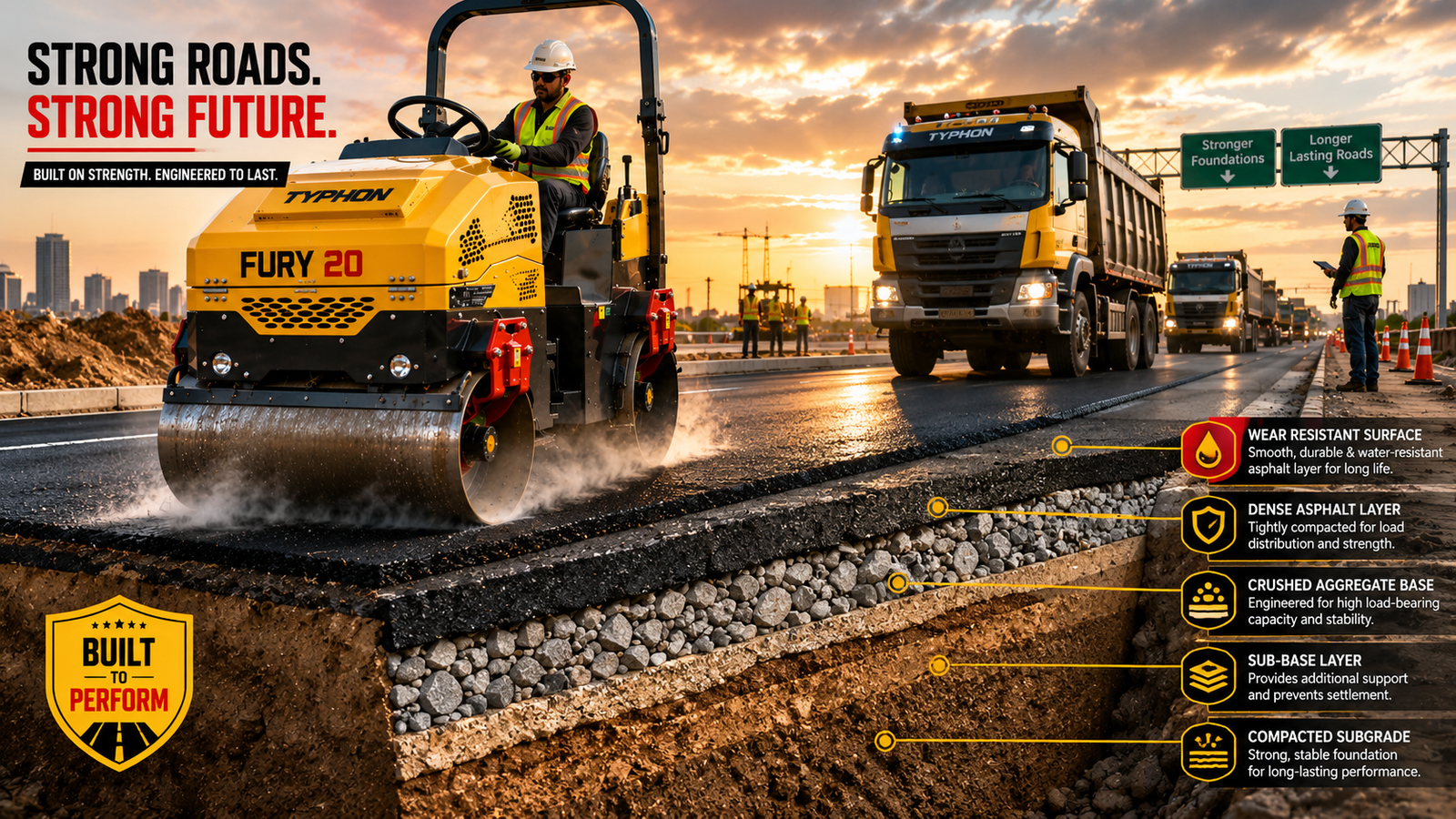
The most persistent challenge in road construction is managing the natural state of raw building materials. Loose soil, crushed gravel, and freshly laid asphalt are inherently unstable because they contain millions of microscopic air pockets. If a paving crew simply spreads these materials out and leaves them uncompacted, the resulting foundation will possess almost no load-bearing strength. When heavy commercial trucks drive over this loose base, their immense weight will easily crush the weak foundation, causing the road to collapse almost immediately.
Road roller compaction provides the definitive engineering solution to this foundational weakness. As a heavy road roller passes over the loose materials, it applies massive downward static pressure and dynamic mechanical vibration. This aggressive force aggressively squeezes the hidden air voids out of the aggregate, pushing the jagged rocks and soil particles tightly together until they lock into a rigid, unyielding matrix. By physically forcing the materials into the tightest possible formation, the roller drastically increases the overall density of the foundation.
The real-world impact of achieving this maximum density is a massive surge in structural strength. A deeply compacted base can easily absorb and distribute the kinetic energy and static weight of heavy traffic without shifting or buckling. This unyielding foundation actively protects the pavement structure from early failure, ensuring the road remains safe and functional for decades. Building this baseline strength is critical, but preventing the road from changing shape under pressure is equally important.
Minimizing Settlement and Preventing Deformation
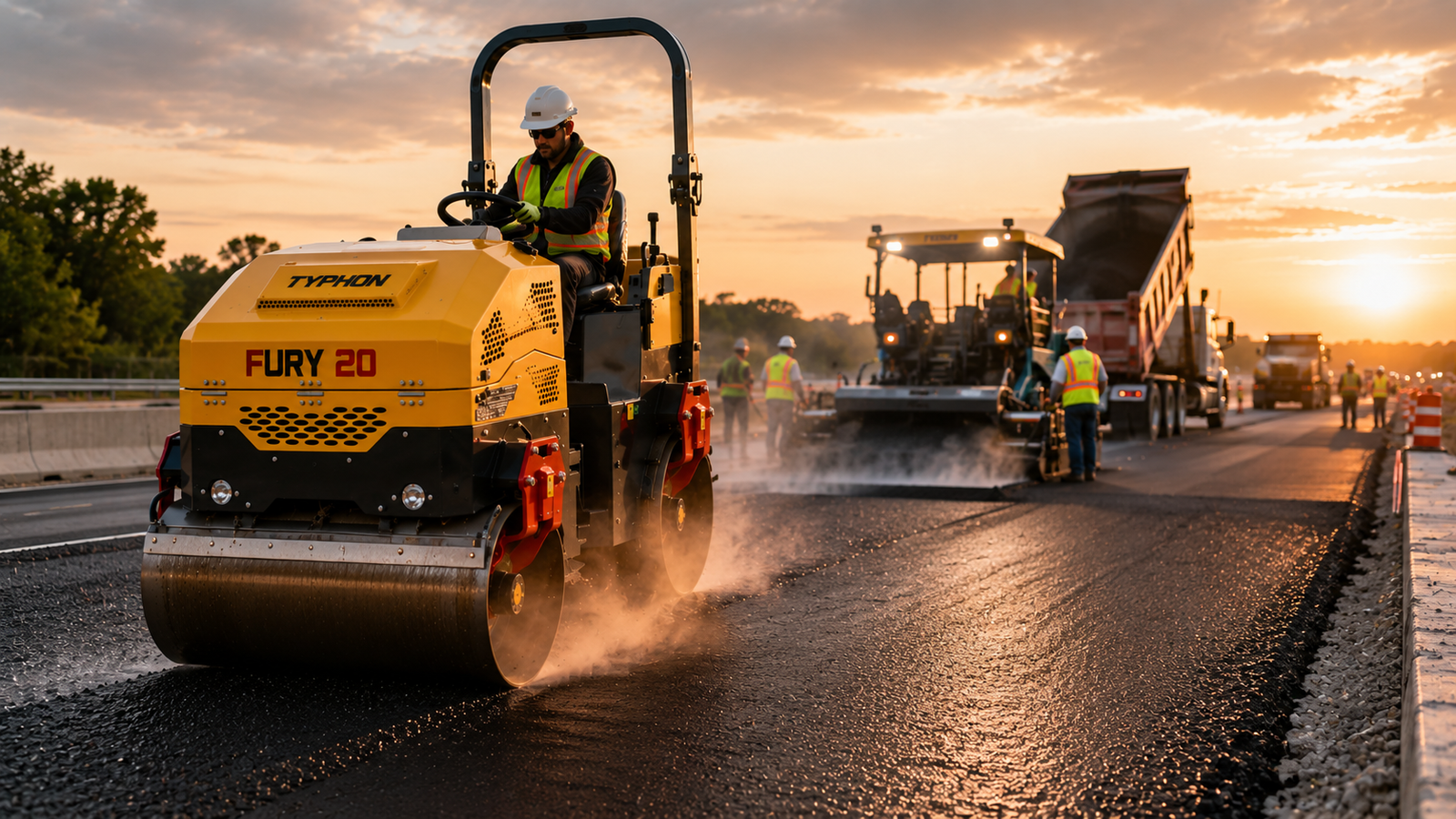
Even with a strong foundation, roads face relentless punishment from constant, concentrated vehicle traffic. Commercial tractor-trailers apply thousands of pounds of pressure directly into the pavement through their tires. If the subgrade or the asphalt layers retain too many air voids, this rolling weight will violently force the materials to shift and compress over time. This uncontrolled, uneven settlement is one of the primary drivers of severe structural deformation.
Proper road roller compaction actively prevents this slow destruction by ensuring the material settles during construction, rather than under live traffic. By systematically removing the empty space between the aggregate particles, rollers leave no room for the material to compress later. This precise mechanical preparation minimizes settlement and stops the pavement from bending under heavy loads. A fully compacted road maintains its intended shape and elevation, regardless of the traffic volume it endures.
Eliminating this structural movement directly prevents the formation of dangerous surface rutting. When a road holds its shape, vehicles do not carve deep, hazardous grooves into the asphalt. Your paving crews deliver a smoother, more stable surface that resists traffic stress and provides a consistently safe driving experience for the public. Keeping the road perfectly flat also plays a vital role in defending the pavement against environmental threats.
Shielding Pavement from Environmental Wear
While heavy traffic constantly tests the physical strength of a road, the natural environment acts as a relentless, silent destroyer. Asphalt and concrete are continuously exposed to intense thermal expansion, heavy rainfall, and severe freezing cycles. If a road is poorly compacted, the microscopic air voids left behind act as open channels for surface water to penetrate deep into the foundation. Once water infiltrates the base layers, it washes away the structural integrity of the soil and prepares the road for catastrophic winter damage.
Road rollers defend against environmental wear by creating an incredibly tight, waterproof seal across the surface mat. When the steel drums compress the hot asphalt, they draw the liquid bitumen to the surface, filling in the microscopic gaps and locking out moisture. This tightly bound surface actively sheds rainwater into the municipal drainage systems rather than absorbing it. By keeping the underlying foundation perfectly dry, proper compaction eliminates the primary cause of internal erosion.
This watertight seal is the ultimate defense against freeze-thaw damage and severe structural cracking. Because water cannot penetrate the compacted asphalt, there is no moisture trapped inside the road to freeze, expand, and shatter the pavement from within. Road durability soars when the environment is locked out, dramatically reducing the frequency of massive potholes and deep surface fissures. Achieving this level of protection, however, requires deploying the correct machinery for the specific environment.
Matching Roller Types to Material Demands
Treating every job site exactly the same is a dangerous operational habit that quickly leads to inconsistent compaction results. The exact physical makeup of the ground beneath your equipment dictates how that material will respond to mechanical pressure. Attempting to compact a deep trench of heavy clay requires a completely different approach than sealing a thin layer of delicate hot-mix asphalt. Applying the wrong type of compressive force guarantees that the material will fail to reach its necessary density targets.
Different roller types and compaction strategies heavily influence the final structural result. Vibratory rollers utilize aggressive, dynamic shaking forces to break the friction in granular soils and thick base layers, achieving deep density in a fraction of the time. Conversely, static rollers rely entirely on their smooth, heavy weight to iron out delicate asphalt surfaces without shattering the aggregate beneath them. Contractors also utilize specialized pneumatic tire rollers that knead the asphalt, providing a highly dense, sealed finish that perfectly mimics the action of heavy vehicular traffic.
Understanding why road compaction matters allows project managers to match their equipment precisely to the material demands of the site. By deploying the correct combination of vibratory and static rollers, your operators achieve target density faster and with far fewer redundant passes. This strategic approach optimizes job site efficiency, reduces daily fuel consumption, and guarantees a superior final product. Failing to implement this level of process discipline inevitably leads to severe financial consequences.
The High Cost of Poor Compaction
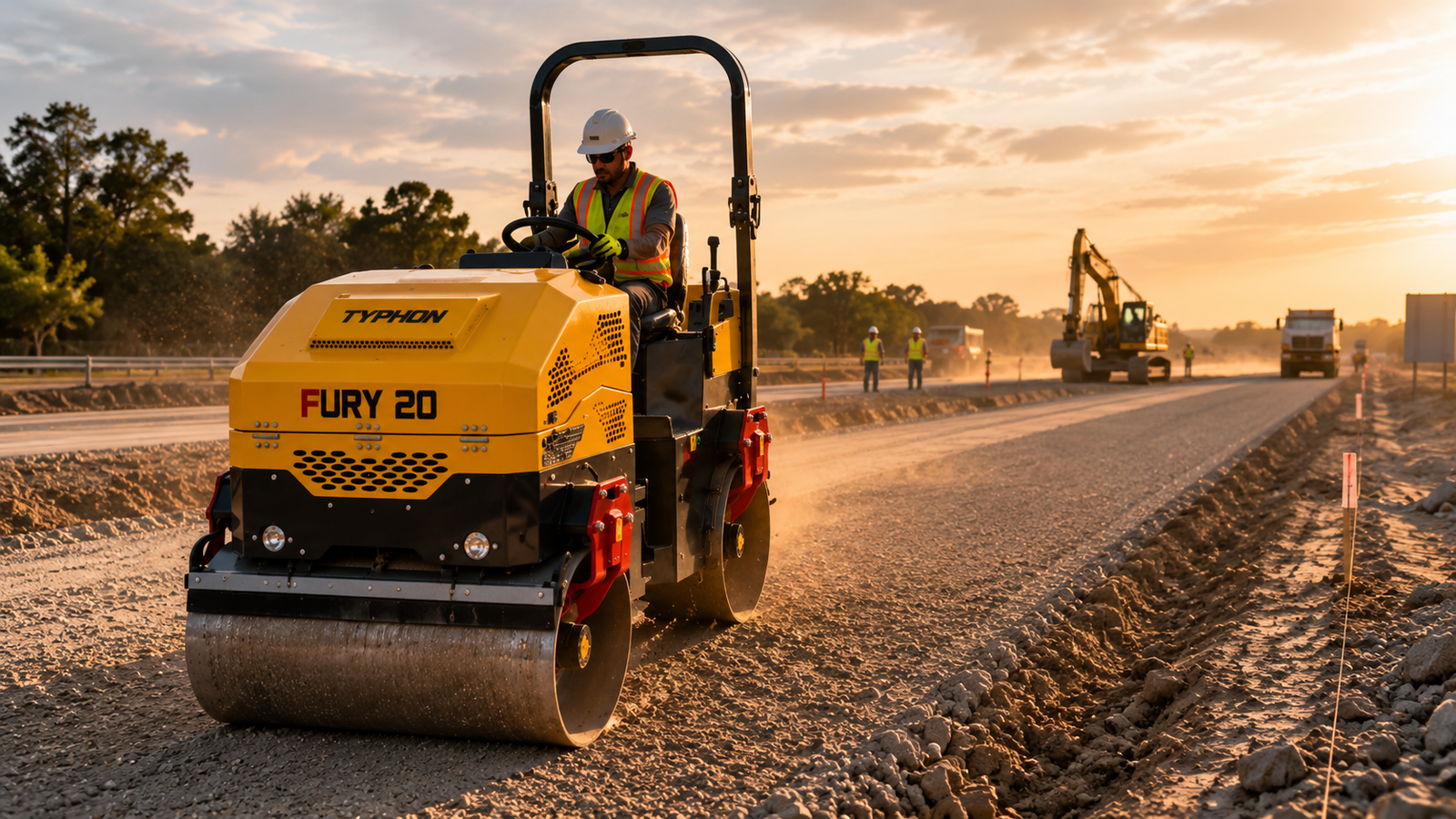
The heavy construction industry operates on tight deadlines, and contractors often feel immense pressure to accelerate their paving schedules. The temptation to rush the site preparation phase and reduce the number of roller passes is a dangerous gamble that always results in failure. Poor compaction is the leading cause of early pavement failure, completely undermining the massive financial investment required to build modern infrastructure.
When a road fails prematurely due to inadequate density, the financial penalty for the contractor is absolutely devastating. Poor compaction dramatically shortens road life and aggressively increases repair costs for municipalities and business owners. Cracking, rutting, and pothole formation force communities to spend millions of dollars on emergency patching and extensive repaving projects long before the road’s intended lifespan concludes. Furthermore, the contractor responsible for the initial failure frequently faces expensive warranty claims and a ruined professional reputation.
Avoiding these massive liabilities requires an unwavering commitment to quality control and operational discipline. Contractors must prioritize the rolling phase, utilizing advanced density testing and intelligent machine monitoring to verify their work. By ensuring every square inch of the road meets strict engineering standards, you protect your company’s working capital and secure your position as a trusted, elite infrastructure provider.
Elevating Safety and Infrastructure Value
The absolute foundation of modern society rests directly on the strength, safety, and reliability of the ground we pave. Smooth, indestructible roads do not happen by accident; they are the direct result of applying precise physics, careful material management, and heavy mechanical force to the earth. When compaction is executed perfectly, the entire community benefits from an infrastructure network that safely supports decades of heavy commercial and civilian traffic.
Understanding how road rollers improve road lifespan helps contractors make better equipment and process decisions on every single project. When you demand proper compaction, you ensure your paving projects will resist traffic stress, lock out environmental damage, and require significantly lower long-term maintenance. Take a highly strategic look at your current equipment fleet and commit to the process of building unyielding foundations. By investing in premium compaction machinery and strict quality control, you build a fiercely capable contracting business that delivers massive, long-lasting value to every client.
