Skid Steer Auxiliary Pump Capacity for Hydraulic Attachments
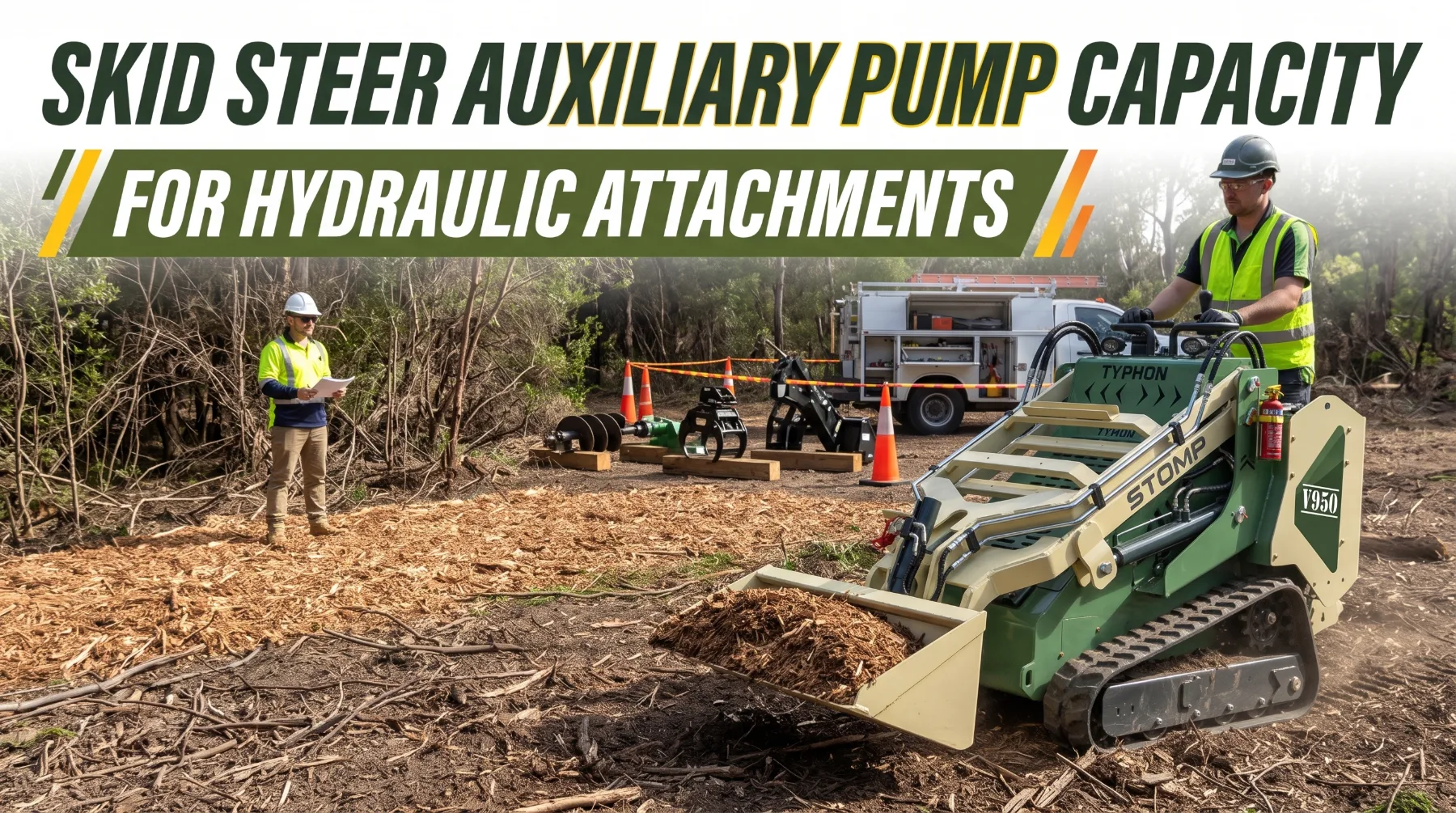
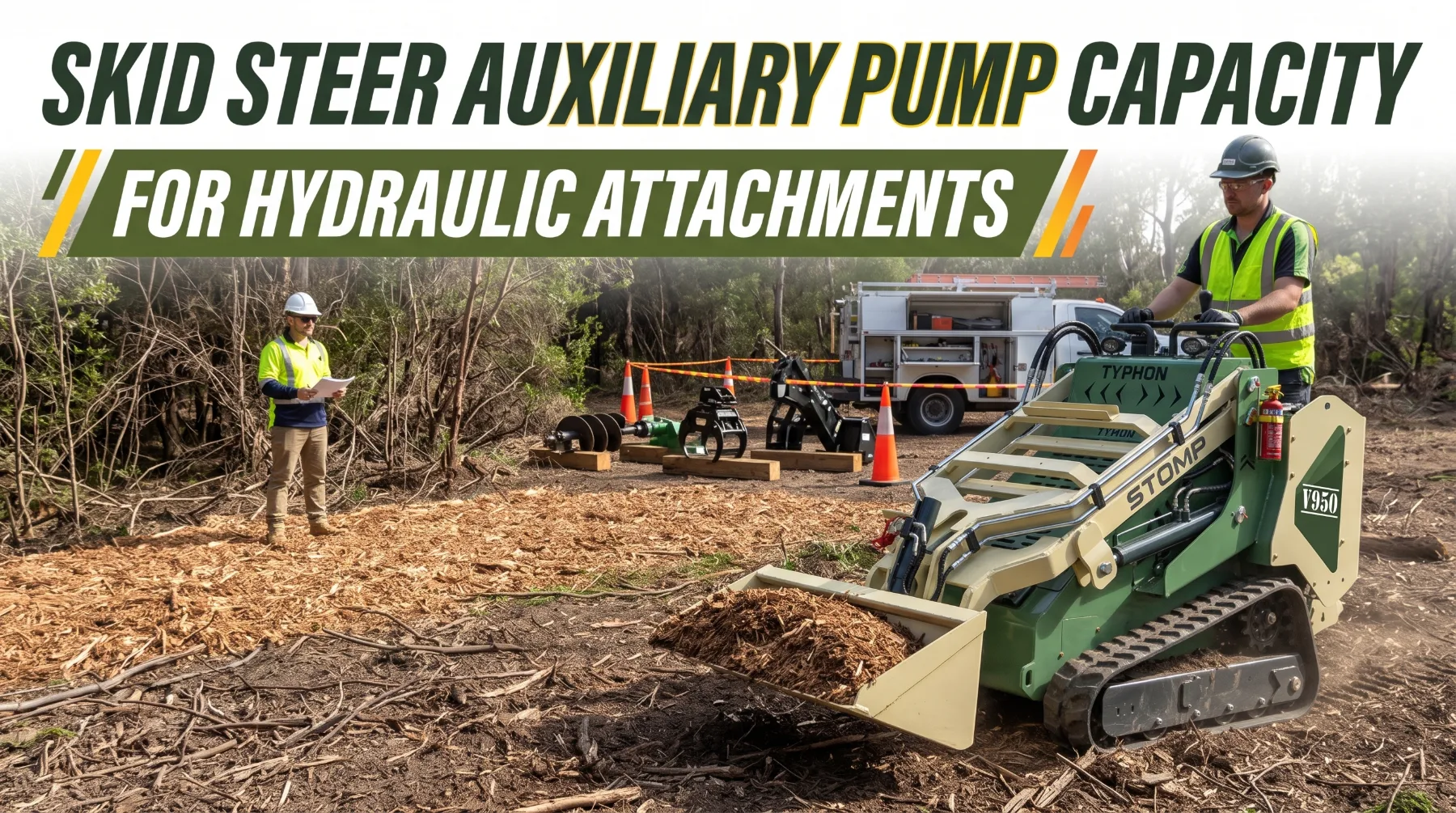
A skid steer's value grows with every attachment it can run. Fitted with the right tool, one machine can drill post holes, cut trenches, break concrete, clear brush, mill asphalt, and sweep a finished site. That versatility depends on the auxiliary hydraulic system, the circuit that sends pressurized oil from the machine to the attachment. If the auxiliary pump and related circuits deliver what the attachment was designed for, the tool runs at its intended speed and torque. If they don't, the result is poor performance, overheating, and damaged components.
Mounting compatibility is only the first check. A universal quick-attach plate lets almost any attachment lock onto almost any skid steer, so it's easy to assume that a tool which fits will also work. Hydraulic compatibility is a separate question. Flow, pressure, coupler type, return arrangement, case drain needs, and electrical controls must all match. An auger that turns too slowly in hard clay, a mulcher that stalls in dense brush, or a breaker that overheats after an hour of work often points to a hydraulic mismatch, not a faulty attachment.
Mismatches also carry real costs. Too little flow slows production and frustrates operators. Too much flow or pressure can push an attachment beyond its design limits and damage motors, seals, and hoses. Incorrect return connections can create back pressure that blows out seals or overheats the system. Several of these failures involve high-pressure fluid, which creates serious safety hazards.
Understanding Auxiliary Hydraulic Flow Ratings
Auxiliary hydraulic flow is the volume of oil the skid steer can deliver to an attachment over time. In the United States, it's usually measured in gallons per minute (gpm). Elsewhere, liters per minute (L/min) is common. Flow sets how fast hydraulic motors spin and how quickly cylinders extend and retract.
For attachments driven by hydraulic motors, such as augers, trenchers, brush cutters, and planers, flow directly controls operating speed. A motor receiving less oil than it was designed for turns more slowly. That can mean an auger that drills slowly, a trencher chain that bogs down, or a cutter that can't reach the blade speed needed for a clean cut. For cylinder-driven tools, such as grapples and dozer blades, lower flow simply makes movements slower.
When reading a spec sheet, keep these points in mind:
- Published flow is usually a maximum. It's typically measured at rated engine speed. Running the engine at lower rpm reduces pump output and attachment speed.
- Flow and pressure figures may not occur together. The machine may not deliver maximum flow at maximum pressure at the same moment.
- Some machines offer adjustable flow. Many modern skid steers let operators set auxiliary flow through the display or a control valve, which helps match specific tools.
- Ratings differ between configurations. The same model may be offered with standard-flow and high-flow options, each with its own figures.
Compare the skid steer's published auxiliary flow rating with the attachment manufacturer's required flow range. A good match falls within that range, not just near it.
Key takeaway: Auxiliary flow controls how fast an attachment's motors and cylinders move, so confirm the skid steer's rated flow, measured at the engine speed you'll actually use, falls within the attachment's required range.
Standard-Flow and High-Flow Configurations
Most skid steers come with a standard-flow auxiliary circuit. Many models also offer a high-flow option, either built in or installed at the factory, for attachments that need more oil volume. Choosing between them depends on the attachments you plan to run most often.
High flow isn't automatically better. An attachment designed for standard flow can be damaged by excessive flow, because its motor may over-speed, overheat, or fail. Some high-flow machines allow the operator to select standard flow for these tools. Others may need a flow-control setting or a specific connection. Never assume that the machine's highest setting is the right one.
High-flow systems also produce more heat. Machines built for high flow typically include larger oil coolers and other components designed to manage that heat. Running heavy attachments on a machine without adequate cooling can raise oil temperature quickly and shorten component life.
Key takeaway: Standard-flow circuits handle most common attachments, while high-flow systems support demanding tools such as mulchers and planers, but every attachment must be run within its own approved flow range and never at a higher setting than it was designed for.
Couplers, Return Lines, and Case Drain Requirements
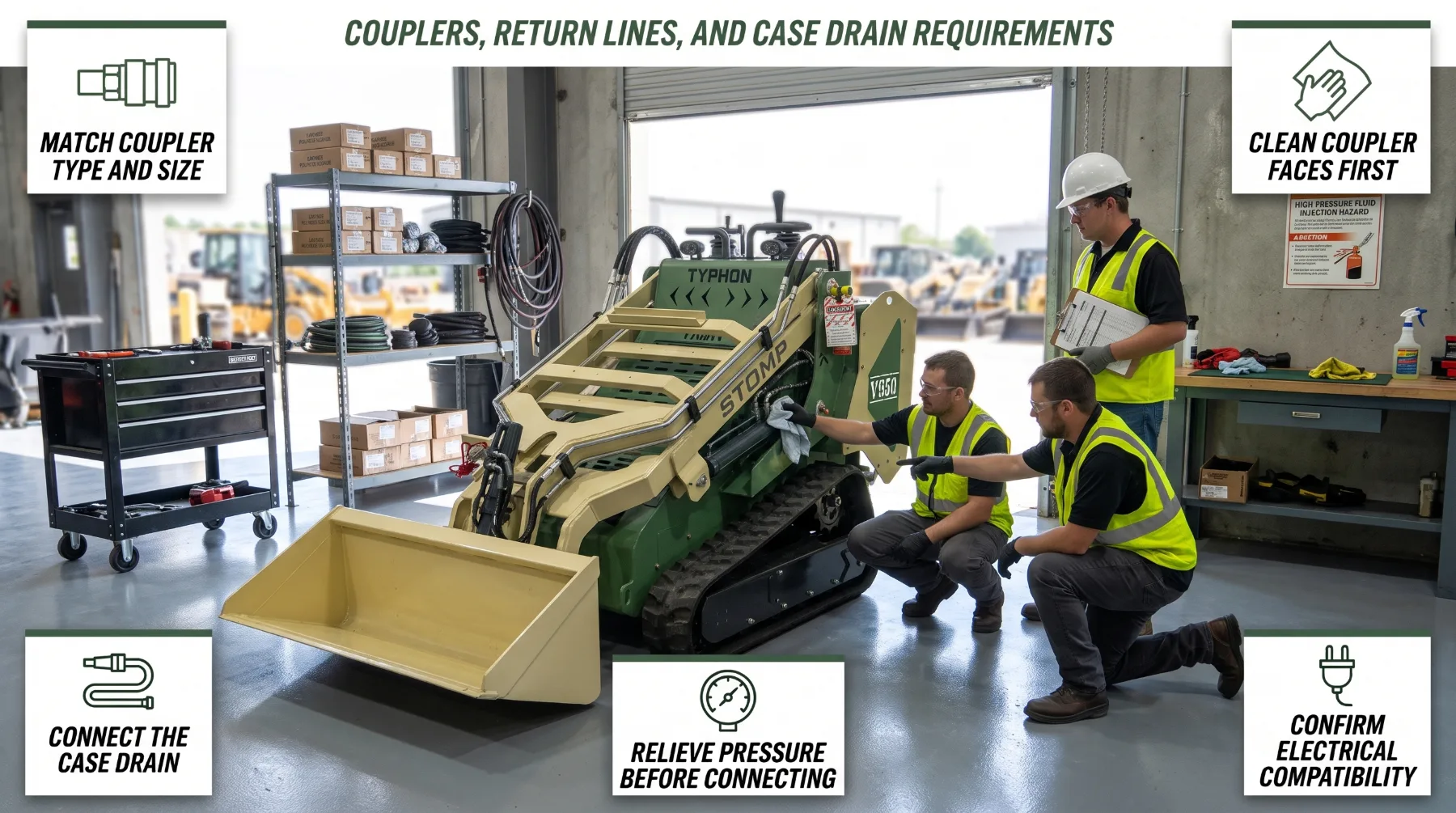
Hydraulic compatibility includes the physical connections between machine and attachment. Correct flow and pressure mean little if oil can't move freely through the couplers and return to the tank as the attachment's design requires.
Couplers and Connections
Most skid steers use flat-face quick couplers on their auxiliary lines. Flat-face designs reduce spillage, limit air and dirt entry, and are easier to clean than older poppet-style couplers. Check that the attachment's couplers match the machine's in type, thread, and size. Undersized couplers restrict flow and create heat, which is a common problem when high-flow attachments are connected through small fittings.
Before connecting, wipe both coupler faces clean. Dirt on a coupler face goes directly into the hydraulic system. After disconnecting, install dust caps on both the machine and attachment couplers.
Return Lines
Oil leaving the attachment must return to the tank with as little restriction as possible. Some attachments, particularly hydraulic breakers and certain motors, are sensitive to back pressure in the return line. Excess back pressure can reduce performance, increase heat, and damage seals. Some tools specify a dedicated low-restriction return path rather than returning oil through the standard auxiliary valve.
Case Drain Lines
Many hydraulic motors used on attachments, such as those on mulchers, planers, and some brush cutters, allow a small amount of oil to bypass internally for lubrication. That oil collects in the motor housing and must drain back to the tank through a separate low-pressure line called a case drain. If the case drain is missing, blocked, or incorrectly connected, pressure builds inside the motor housing and can blow out the shaft seal or damage the motor.
Always connect the case drain before starting an attachment that requires one. Confirm the machine has a case drain port, and never cap or plug a case drain line to make a connection fit.
Electrical Controls
Many advanced attachments also need electrical connections to control functions such as tilt, side shift, or blade rotation. These often use multi-pin connectors, and pin configurations vary between manufacturers. Confirm compatibility before purchase, since adapters or harnesses may be required.
Key takeaway: Match coupler type and size, provide low-restriction return paths and case drains where required, confirm electrical compatibility, and always relieve auxiliary pressure and clean coupler faces before connecting.
Matching Auxiliary Capacity to Attachment Types
Each attachment category places different demands on the auxiliary system. Even two tools in the same category can have very different requirements, so always review the exact model's specification sheet before connecting it.
- Augers: Driven by hydraulic motors, augers need flow for drilling speed and pressure for torque. Hard clay, rocky soil, and large-diameter bits require more torque. Auger drives are offered in different speed and torque ratings, so choose one matched to the machine's flow.
- Trenchers: These need steady flow to keep the chain moving and enough pressure to cut through dense or rocky ground. Some heavy trenchers require high flow.
- Hydraulic breakers: Breakers typically need flow within a defined range, often with one-way flow and a low-restriction return. Too much flow can over-speed the piston and damage the tool, while too little reduces impact rate.
- Brush cutters: Light-duty cutters may run on standard flow, while heavy-duty models usually need high flow and a case drain line.
- Forestry mulchers: These are among the most demanding attachments and generally need high flow, high pressure, a case drain, and strong cooling capacity for continuous operation.
- Cold planers: Planers require high flow and suitable pressure, and many need electrical controls for depth and tilt adjustment.
- Grapples and hydraulic clamps: Cylinder-driven tools usually need modest flow and two-way operation.
- Sweepers and snow blowers: Requirements vary widely, from standard-flow pickup brooms to high-flow snow blowers.
Ask the dealer or attachment manufacturer to confirm compatibility when any figure is unclear. A short conversation before purchase costs far less than a damaged motor or an attachment that can't do the work.
Key takeaway: Attachments have very different flow, pressure, return, and drain requirements, so review the exact model's specifications and confirm compatibility with the skid steer's configuration before every new pairing.
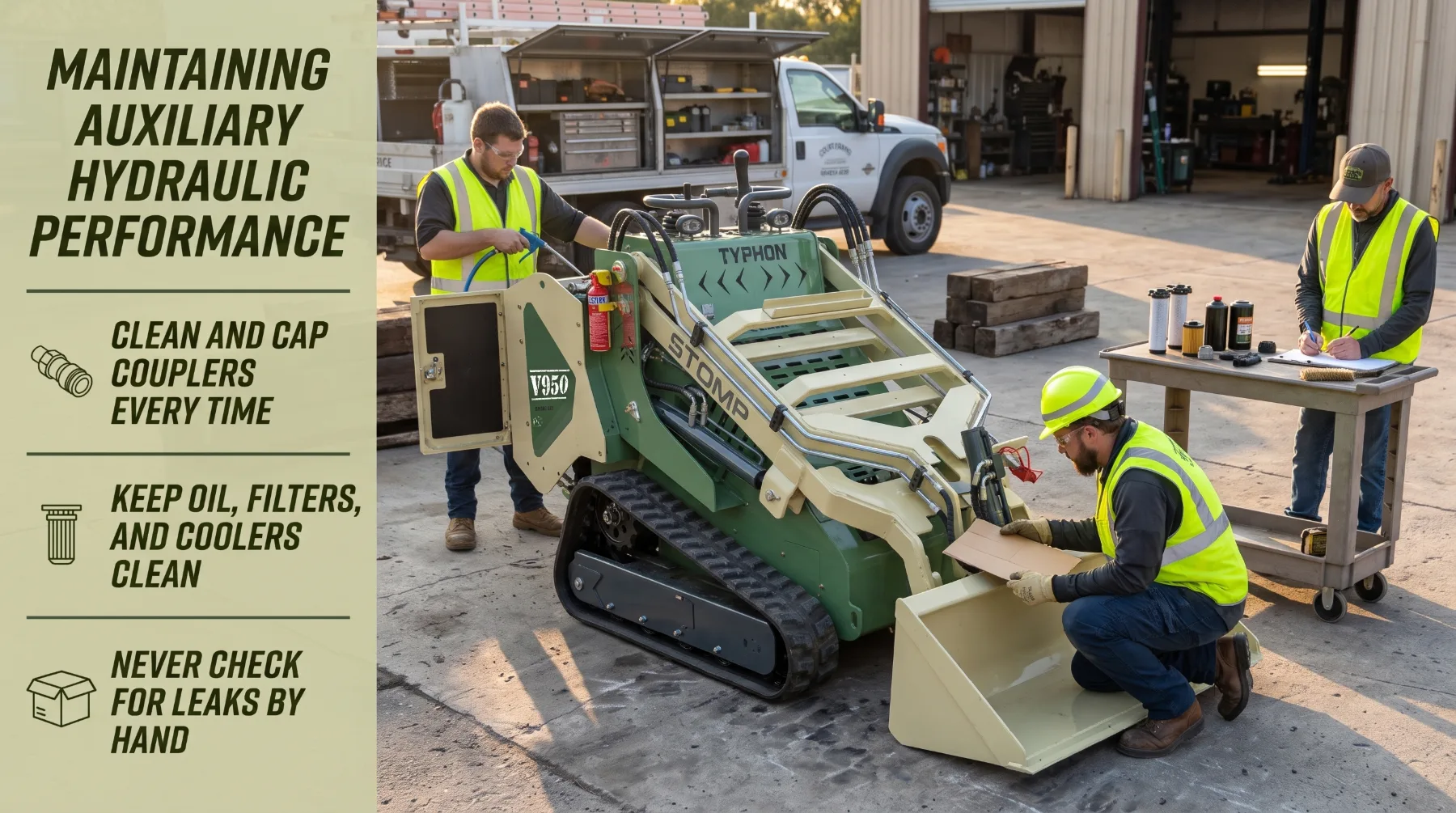
Maintaining Auxiliary Hydraulic Performance
A well-matched system still loses performance when it's poorly maintained. Auxiliary circuits face frequent coupler changes, dusty conditions, and heavy continuous loads, all of which increase the risk of contamination, wear, and overheating.
Include these checks in regular inspections:
- Couplers: Clean faces before every connection, look for leaks and damage, and replace worn couplers. Keep dust caps installed when attachments are disconnected.
- Hoses: Inspect auxiliary hoses for abrasion, cracking, bulging, kinking, and exposed reinforcement. Pay attention to areas where hoses flex near the lift arms and quick-attach plate.
- Fittings and seals: Look for oily residue or dust buildup, which often marks a slow leak.
- Hydraulic oil: Check level and condition on schedule. Milky oil may indicate water, while darkened oil or a burnt smell can signal overheating.
- Filters: Replace hydraulic filters according to the manufacturer's schedule, and more often in dusty conditions or after heavy attachment use.
- Oil cooler: Keep the cooler and radiator clean so the system can shed heat, especially when running mulchers, planers, or other continuous-duty tools.
- Attachment hoses: Inspect the attachment's own hoses and couplers, since contamination often enters from the tool side.
Watch for warning signs during operation:
- Rising hydraulic oil temperature or overheating warnings
- Slow or weak attachment response
- Unusual motor noise, whining, or knocking
- Inconsistent or surging operation
- Oil leaking from a motor shaft seal, which may indicate case drain problems
These symptoms may point to incorrect flow settings, restricted couplers, a missing case drain, contaminated oil, clogged filters, or worn components. Stop operation if a fault is suspected, and follow the manufacturer's diagnostic and maintenance procedures.
Safety must come first during any inspection. Never use your hands to check for a hydraulic leak. Fluid escaping through a pinhole under high pressure can penetrate skin and cause a serious injury that requires immediate medical attention, even if the wound looks minor. Use a piece of cardboard or wood instead, and wear gloves and eye protection. Before servicing, lower the attachment and lift arms to the ground, shut down the engine, and relieve hydraulic pressure. Never work under raised lift arms unless they're secured with the manufacturer's approved support device. Hot hydraulic oil can also cause burns, so allow the system to cool before opening components.
Key takeaway: Clean and cap couplers, inspect hoses and fittings, maintain oil, filters, and coolers, watch for overheating and weak response, and never check for leaks with your hands.
Conclusion
Skid steer auxiliary pump capacity determines whether a hydraulic attachment delivers the speed, torque, and reliability it was designed for. Flow ratings set how fast motors and cylinders move, and standard-flow and high-flow configurations each suit different classes of tools. Pressure must also fall within the attachment's approved range, and relief settings should never be raised beyond specification. Couplers, return lines, case drains, and electrical connections complete the compatibility picture, and each attachment type brings its own requirements. Consistent maintenance of hydraulic filters, couplers, hoses, oil, and coolers helps keep the system performing safely over time. Regular engine oil level checks and timely oil changes are equally important for maintaining engine performance and preventing premature wear. Before connecting your next attachment, review its specification sheet, compare flow, pressure, and connection requirements against your skid steer's configuration, set auxiliary flow correctly, and inspect every coupler and hose. Also, check hydraulic filters and engine oil levels according to the manufacturer's maintenance schedule. That disciplined approach protects your equipment investment and keeps every attachment working productively and safely.
Frequently Asked Questions
What does auxiliary hydraulic flow determine?
Auxiliary flow determines how much hydraulic oil reaches an attachment over time, which controls how fast its motors spin and its cylinders move. For augers, trenchers, cutters, and planers, flow sets operating speed and productivity. Too little flow makes the tool slow and ineffective, while too much can over-speed motors and cause damage. Published flow is usually measured at rated engine speed, so running at lower rpm reduces the flow available to the attachment.
Is high-flow hydraulics better for every attachment?
No. High-flow systems support demanding attachments such as forestry mulchers, cold planers, and heavy brush cutters, but tools designed for standard flow can be damaged when supplied with excessive flow. Each attachment has an approved flow and pressure range, and it should always be operated within that range. Many high-flow machines allow operators to select standard flow for these tools. Confirm the required setting with the attachment manufacturer before connecting.
Why does an attachment need a case drain?
Many hydraulic motors allow a small amount of oil to bypass internally for lubrication. That oil collects in the motor housing and must return to the tank through a separate low-pressure case drain line. Without a working case drain, pressure builds inside the housing and can blow out the shaft seal or damage the motor. Always connect the case drain before operating an attachment that requires one, and never cap or plug the line.
Can the wrong hydraulic flow damage an attachment?
Yes. Excessive flow can over-speed motors, overheat components, and damage seals and bearings, while insufficient flow causes poor performance and can lead to stalling under load. Incorrect pressure, restricted couplers, back pressure in the return line, or a missing case drain can also cause overheating, leaks, and component failure. Match flow, pressure, and connection requirements to the attachment's specifications, and set auxiliary flow correctly before every use.
