
How Stone Crushing Can Support Road and Site Preparation
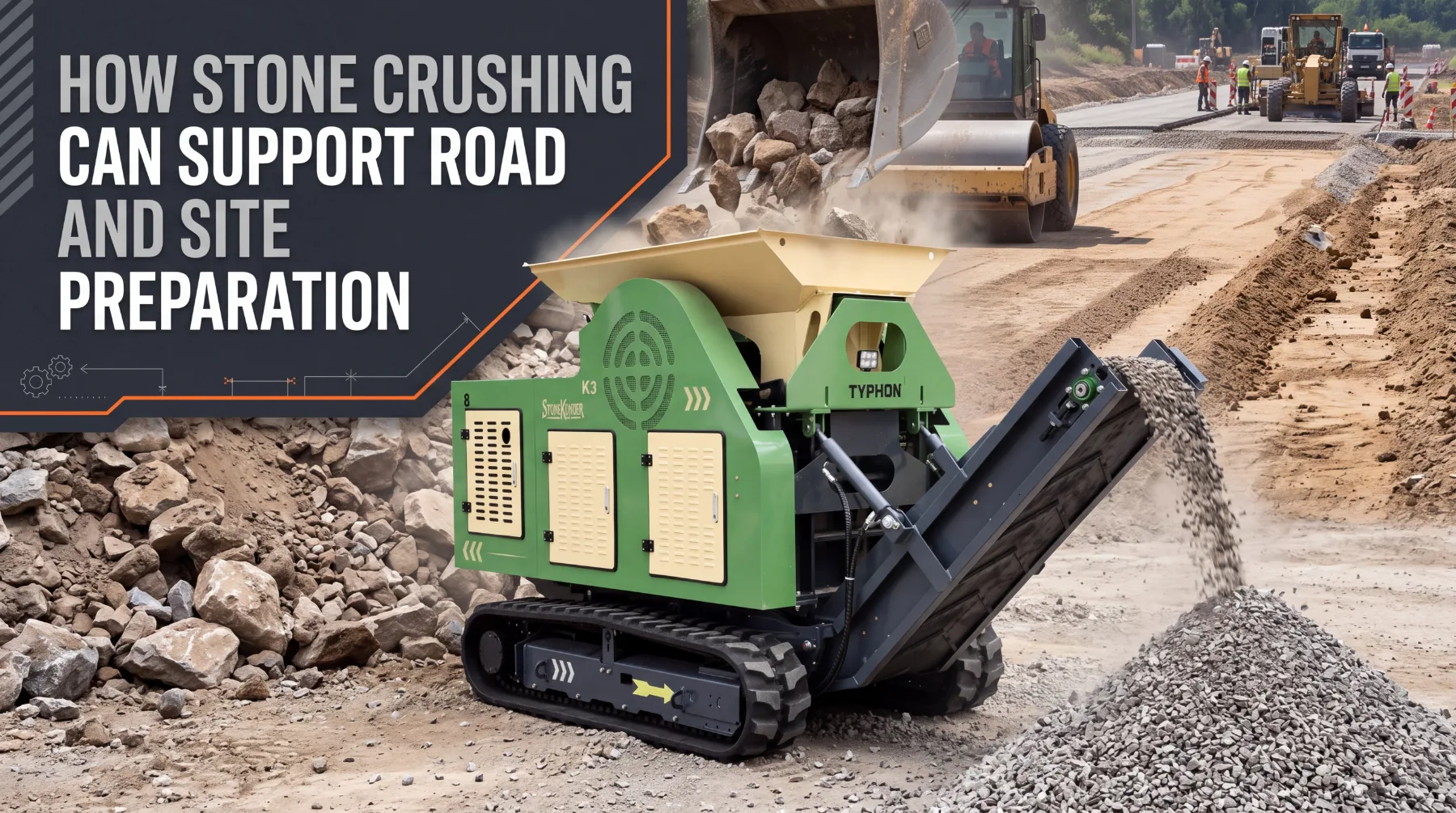
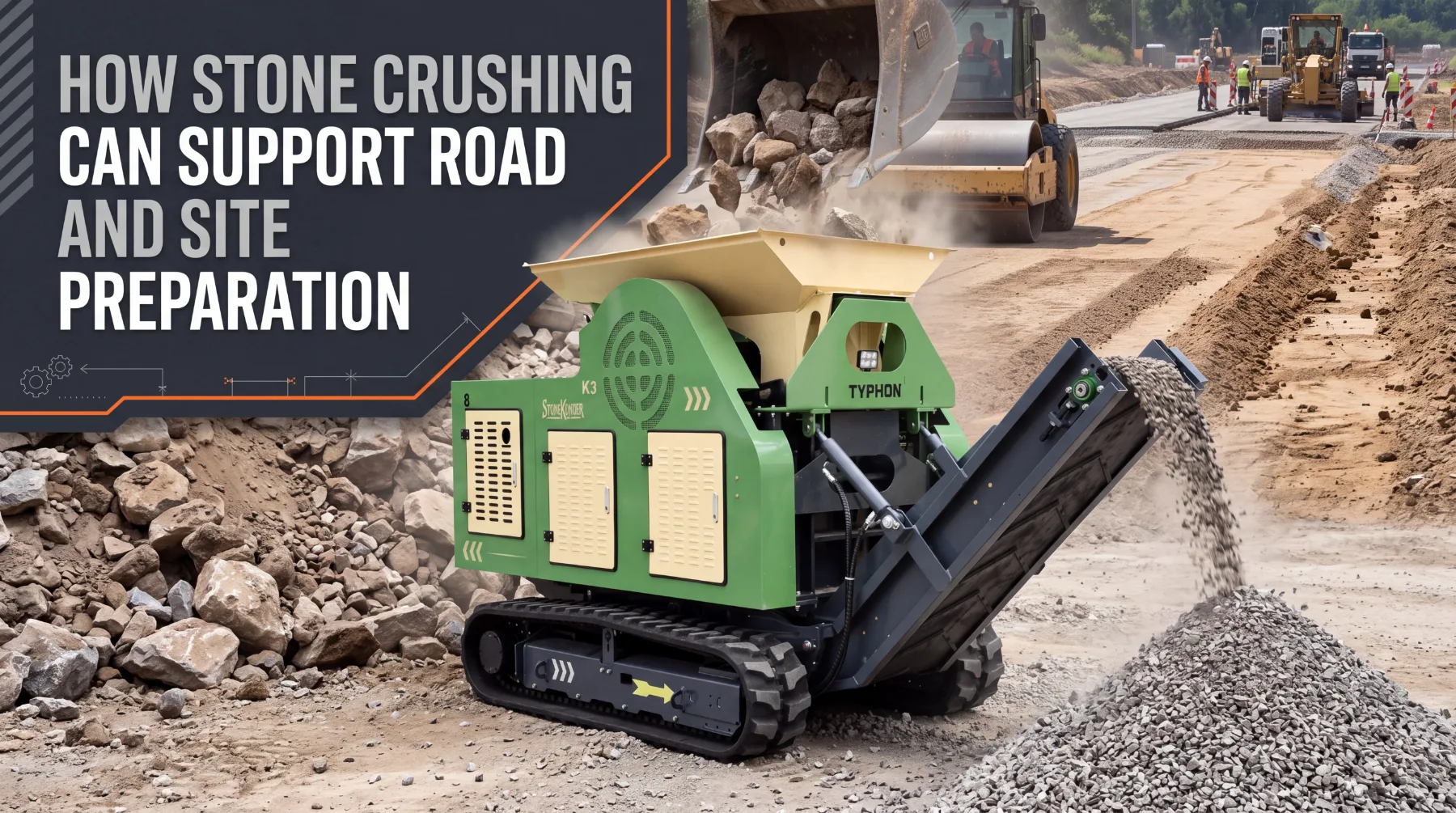
Site preparation sets the stage for everything that follows on a construction project, and the quality of the material you build on shapes the outcome from the ground up. Stone crushing gives contractors a practical way to produce the aggregate that road bases, drainage layers, and graded surfaces depend on, often using material already present on the site. Rather than relying entirely on purchased aggregate hauled in from elsewhere, a crusher lets you turn rock and rubble into dependable construction material where the work is happening.
This guide explains how stone crushing supports road and site preparation across five key areas. You will learn how crushers produce useful aggregate on site, how crushed stone builds stable road bases, how excavated material can be reused rather than discarded, how different aggregate sizes support grading and drainage, and how on-site crushing reduces material transport. By the end, you will see why crushing has become a valuable part of efficient site preparation.
Producing Useful Aggregate On Site
Stone crushers can process larger rocks into usable aggregate directly at the project location, and this ability sits at the heart of what makes on-site crushing so valuable to site preparation. Instead of ordering aggregate from a distant supplier and waiting for delivery, a crew can take the rock available on the job and reduce it to the sizes the work requires. Large stone excavated during clearing, grading, or foundation work goes into the machine and comes out as aggregate ready to serve a real purpose, which keeps the project moving at a steady, self-sufficient pace.
The range of applications this material can serve is broad, and that versatility is a large part of its appeal. Aggregate produced on site can support several essential preparation tasks:
- Road bases, providing the compactable foundation that supports surfacing and traffic loads
- Pathways, giving pedestrian and light-use routes a firm, stable surface
- Drainage layers, allowing water to move away from structures and roadways
- General site preparation, filling, leveling, and building up ground as the project demands
Producing this material where it is needed changes the rhythm of a project for the better. When a crew controls its own aggregate supply, it is not held up by delivery schedules, supplier availability, or the cost of repeated orders. The material is on hand the moment it is required, and the crusher can be set to produce the specific sizes each task calls for. This gives site managers a dependable, flexible source of construction material that adapts to the work rather than dictating its pace. For projects of nearly any size, the capacity to produce useful aggregate on site is a straightforward, reliable way to keep preparation efficient and firmly under the crew’s own control.
Preparing Stable Road Bases
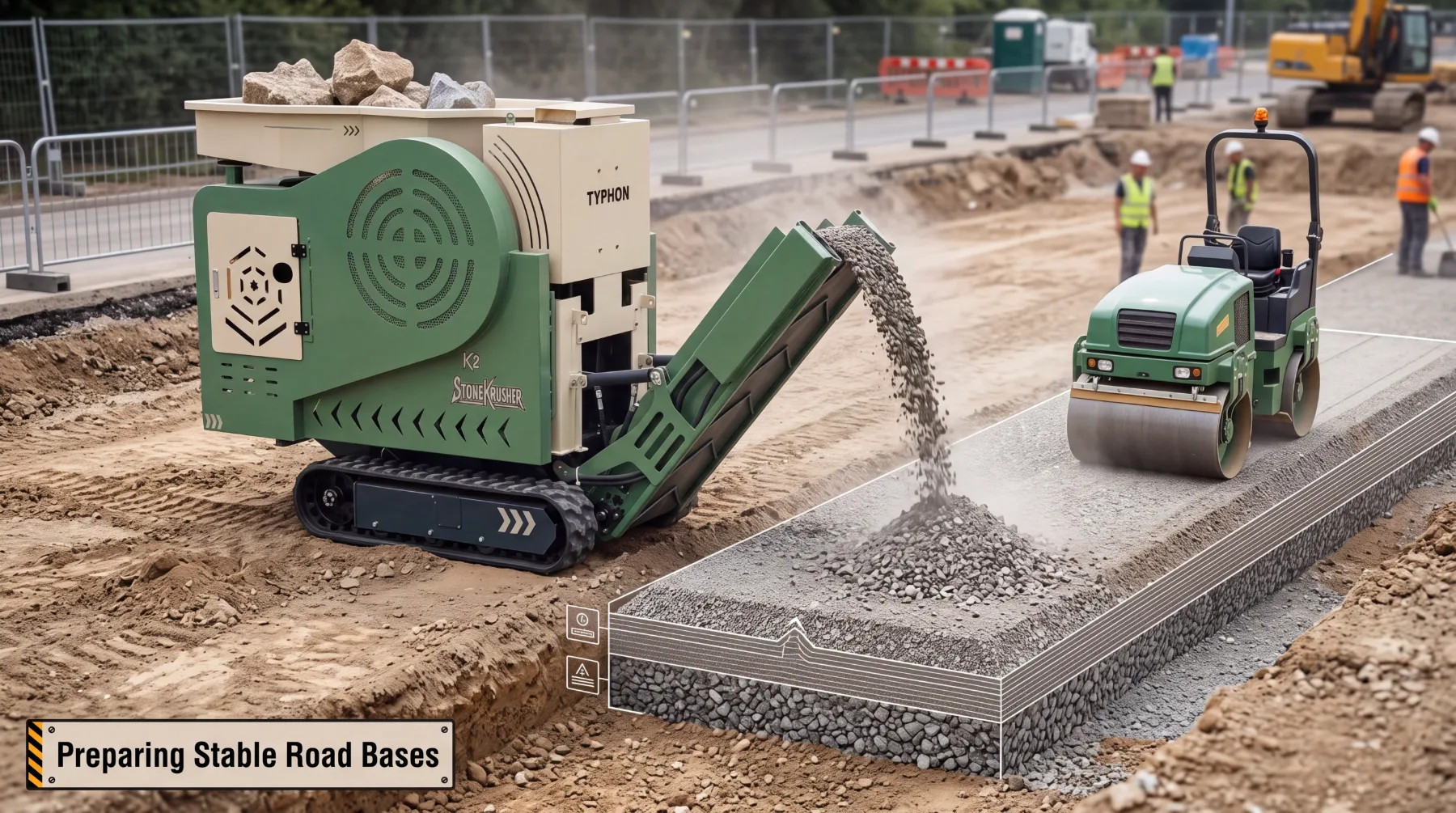
Crushed stone provides a compactable material for building road base layers, and this role is one of the clearest examples of how crushing supports construction. A road base is the layer that carries the load of the surface above it and the traffic that will eventually use the road, so it has to be strong, stable, and able to hold its shape under pressure. Crushed stone is well suited to this because its angular, freshly broken faces lock together when compacted, creating a dense, interlocked layer that resists movement and provides a firm foundation.
Proper sizing is what makes this foundation dependable. Aggregate produced for a road base needs to fall within the right range and gradation so it compacts evenly and forms a solid, uniform layer. A well-graded mix of particle sizes allows the material to knit together tightly, with smaller pieces filling the gaps between larger ones. This creates a base that compacts to a high density and stays stable once the surfacing goes down on top of it.
The sequence matters here. Establishing a properly sized, well-compacted stone base before applying additional surfacing materials is what gives the finished road its strength and longevity. A base that is poorly graded or inadequately compacted can settle unevenly, leading to problems in the surface above that are difficult and costly to correct later. By contrast, a stable base built from correctly sized crushed stone supports the surfacing evenly and helps the completed road perform reliably over time. When a crusher produces aggregate matched to the demands of the base layer, the crew can build that foundation with confidence, knowing the material will compact properly and provide the stable footing every quality road depends on.
Reusing Excavated Material
Material removed during excavation can often be processed and reused rather than hauled away, and this is one of the most practical and economical benefits stone crushing brings to site preparation. Excavation routinely produces large volumes of rock, and demolition or renovation work adds broken concrete to the mix. Traditionally, much of this material is treated as waste and trucked off site at considerable cost. A crusher changes that equation by turning suitable rock and concrete into useful construction material right where it was dug up.
The benefits of this approach are both financial and logistical. Consider what reusing excavated material accomplishes:
- Reduced disposal costs, since less material needs to be hauled away and paid to dispose of
- Lower purchasing costs, because reclaimed aggregate can replace some or all of the new material that would otherwise be bought
- Simpler logistics, with fewer trucks moving material off and onto the site
Turning jobsite waste into usable material makes good sense for projects focused on efficiency and responsible resource use. Excavated rock can be crushed into aggregate for bases, fill, and drainage, while broken concrete can be reduced into reclaimed aggregate suitable for similar applications. Material that would once have been a disposal problem becomes a resource the project can put straight back to work.
It is worth confirming that the material is suitable before processing, since not all excavated material is appropriate for every application. When the rock or concrete is well matched to the intended use, however, reusing it is a sound way to stretch a project’s resources. The crew gets dependable construction material, disposal and purchasing costs both fall, and the site operates in a more self-contained, efficient manner from start to finish.
Supporting Site Grading and Drainage
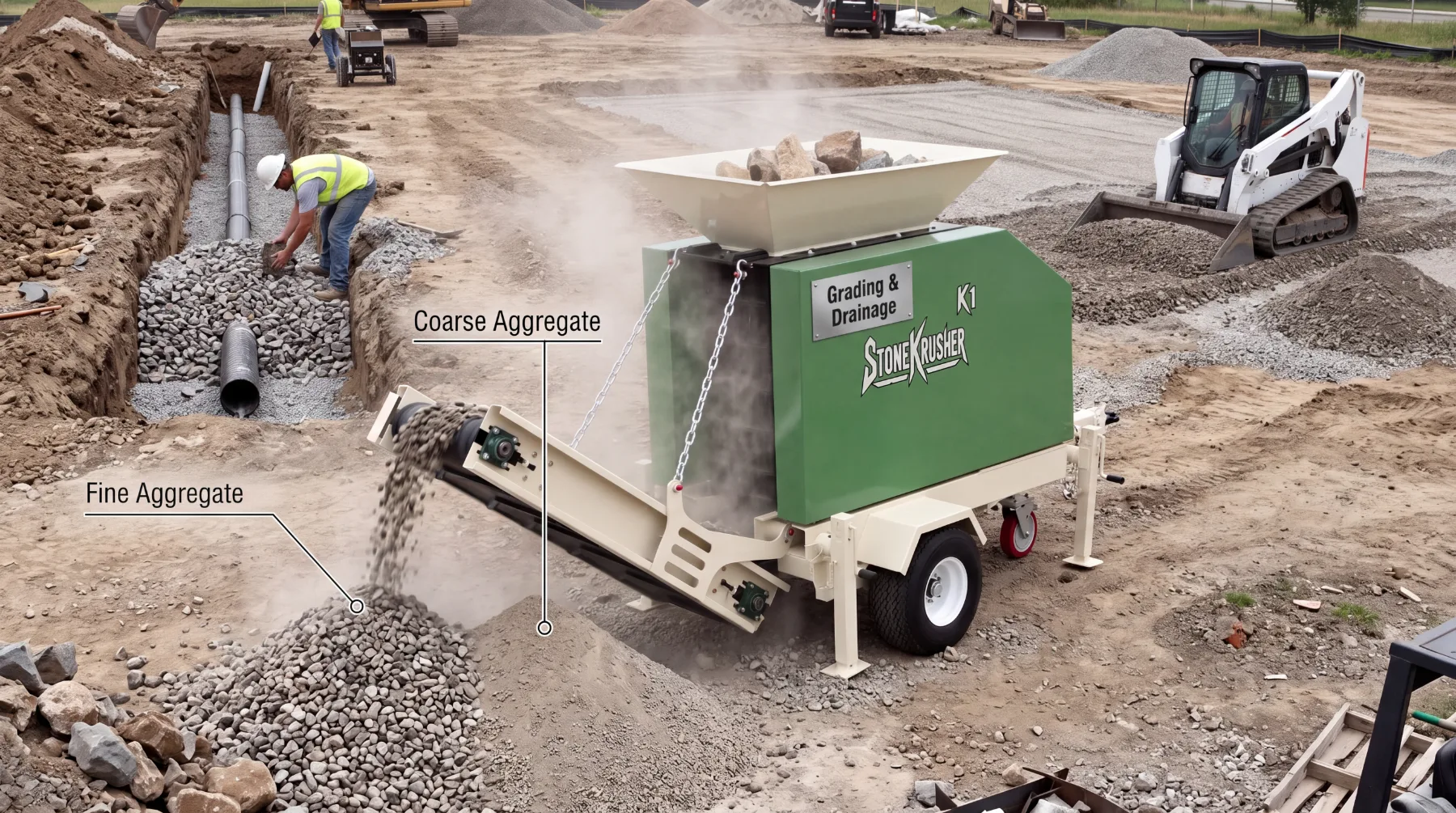
Different aggregate sizes serve different purposes in preparation work, and a crusher’s ability to produce a range of sizes makes it a valuable tool for site grading and drainage tasks. Grading a site to the correct levels and building in proper drainage both depend on having the right material for each specific job. Coarse aggregate suits some applications, while finer material suits others, and being able to produce the appropriate size on demand allows a crew to handle these tasks with the material best matched to each one.
Several common preparation tasks rely on aggregates of particular sizes. Drainage beds, for example, typically use coarser, more open aggregate that allows water to pass through freely and move away from structures and roadways. Leveling layers call for material that spreads and compacts evenly to bring a surface to the required grade. General ground preparation may use a mix of sizes depending on whether the goal is filling, building up, or creating a firm working surface. Having the right aggregate for each of these tasks helps the work go smoothly and produces results that hold up over time.
The convenience of having processed material available on site should not be underestimated. When a crew can produce the sizes it needs as the work progresses, grading and drainage tasks proceed without waiting on outside deliveries or making do with material that is not quite right for the job. This keeps preparation flowing and lets the crew respond to the specific demands of the site as they arise. A crusher that produces a range of aggregate sizes gives site managers the flexibility to prepare ground and manage drainage effectively, ensuring each layer and each task gets material suited to its purpose. That flexibility is a genuine advantage on any project where grading and drainage shape the finished result.
Reducing Material Transport
Processing stone closer to where it is needed reduces the distance aggregate must travel, and this reduction in transport is one of the most tangible ways crushing improves the efficiency of site preparation. When aggregate is produced off site, it has to be hauled to the project, sometimes over long distances, and every load carries costs in fuel, time, and vehicle wear. Crushing material on or near the site shortens that journey dramatically, since the aggregate is produced where it will be used rather than trucked in from a distant supplier.
This benefit grows more significant as projects get larger or more remote. On a big site that consumes large volumes of aggregate, the number of delivery trips required can be considerable, and each one adds to the cost and complexity of the operation. Producing that aggregate on site cuts those trips down substantially, easing the logistical burden and keeping the material supply firmly within the crew’s control. On remote sites, where the nearest supplier may be a long way off and road access may be limited, the advantage is even clearer, as long hauls become short internal moves instead.
Simplifying material logistics this way delivers benefits that extend across the whole project. Fewer trucks on the road means lower transport costs, less congestion on access routes, and a reduced risk of delays caused by delivery schedules or road conditions. The crew gains a steadier, more predictable material supply and spends less time coordinating deliveries. For contractors managing larger or more remote construction sites, reducing material transport through on-site crushing is a dependable way to keep preparation efficient, control costs, and ensure aggregate is available exactly when and where the work requires it.
Conclusion
Stone crushing supports road and site preparation in ways that touch nearly every stage of the work. It produces useful aggregate directly on site for bases, pathways, and drainage, supplies the compactable crushed stone that stable road bases depend on, and turns excavated rock and concrete into reusable material instead of costly waste. It also gives crews the range of aggregate sizes that grading and drainage tasks require, and it reduces the material transport that drives up cost and complexity on larger and more remote projects.
Taken together, these advantages make on-site crushing a practical and dependable part of efficient site preparation. Before your next project, consider the material you expect to excavate, the aggregate your bases and drainage will require, and the distances involved in sourcing that material. Matching a crusher to those needs gives you a reliable, self-contained way to produce quality aggregate where the work is happening, helping you build stable foundations, prepare ground effectively, and keep your project moving with confidence from start to finish.
Frequently Asked Questions
1. What kind of aggregate can a stone crusher produce on site?
A stone crusher can process larger rocks into a range of usable aggregate sizes directly at the project location, giving crews the material they need without relying on outside deliveries. Large stone excavated during clearing, grading, or foundation work goes into the machine and comes out as aggregate ready for real construction use. This on-site material can serve road bases, providing the compactable foundation that supports surfacing and traffic loads, as well as pathways that need a firm, stable surface. It also works well for drainage layers that move water away from structures and roadways, and for general site preparation tasks such as filling and leveling. The crusher can be set to produce the specific sizes each task calls for, which gives site managers a flexible, dependable source of material. Because the aggregate is available the moment it is needed, the crew controls its own supply and is not held up by delivery schedules, supplier availability, or the cost of repeated orders.
2. Why is crushed stone a good choice for road bases?
Crushed stone is well suited to road bases because it provides a compactable material that forms a strong, stable foundation. A road base carries the load of the surface above it and the traffic the road will eventually bear, so it must hold its shape under pressure. The angular, freshly broken faces of crushed stone lock together when compacted, creating a dense, interlocked layer that resists movement. Proper sizing is what makes this foundation dependable. A well-graded mix of particle sizes allows the material to knit together tightly, with smaller pieces filling the gaps between larger ones, so the base compacts to a high density and stays stable. The sequence matters too, since establishing a properly sized, well-compacted stone base before applying surfacing is what gives the finished road its strength and longevity. A poorly graded or inadequately compacted base can settle unevenly and cause problems in the surface above, while a stable base supports the surfacing evenly and helps the road perform reliably over time.
3. Can I reuse material excavated from my own site?
Yes, material removed during excavation can often be processed and reused rather than hauled away, which is one of the most practical benefits stone crushing offers. Excavation routinely produces large volumes of rock, and demolition or renovation work adds broken concrete to the mix. Rather than treating this as waste and paying to truck it off site, a crusher can turn suitable rock and concrete into useful construction material right where it was dug up. Excavated rock can become aggregate for bases, fill, and drainage, while broken concrete can be reduced into reclaimed aggregate for similar uses. The benefits are both financial and logistical, including reduced disposal costs, lower purchasing costs since reclaimed material can replace new aggregate, and simpler logistics with fewer trucks moving material. It is worth confirming that the material is suitable before processing, since not all excavated material fits every application. When it is well matched to the intended use, reusing it is a sound way to stretch a project’s resources.
4. How does aggregate size affect grading and drainage work?
Aggregate size plays a central role in grading and drainage because different tasks depend on different material. A crusher’s ability to produce a range of sizes lets a crew match the material to each specific job, which is what makes it so useful for these tasks. Drainage beds typically use coarser, more open aggregate that allows water to pass through freely and move away from structures and roadways. Leveling layers call for material that spreads and compacts evenly to bring a surface to the required grade. General ground preparation may use a mix of sizes depending on whether the goal is filling, building up, or creating a firm working surface. Having the right aggregate for each task helps the work proceed smoothly and produces results that last. The convenience of having processed material available on site adds to this, since a crew can produce the sizes it needs as the work progresses rather than waiting on outside deliveries or making do with material that is not quite right.
5. Does on-site crushing really reduce material transport costs?
Yes, processing stone closer to where it is needed reduces the distance aggregate must travel, which is one of the most tangible ways crushing improves efficiency. When aggregate is produced off site, it has to be hauled to the project, sometimes over long distances, and every load carries costs in fuel, time, and vehicle wear. Crushing material on or near the site shortens that journey dramatically, since the aggregate is produced where it will be used. This benefit grows more significant on larger or more remote projects. A big site that consumes large volumes of aggregate may require a considerable number of delivery trips, and producing that material on site cuts those trips down substantially. On remote sites, where suppliers may be far away and road access limited, long hauls become short internal moves instead. Fewer trucks on the road means lower transport costs, less congestion, and reduced risk of delays, giving the crew a steadier, more predictable material supply.
