Why Turning Radius Matters When Choosing a Compact Road Roller
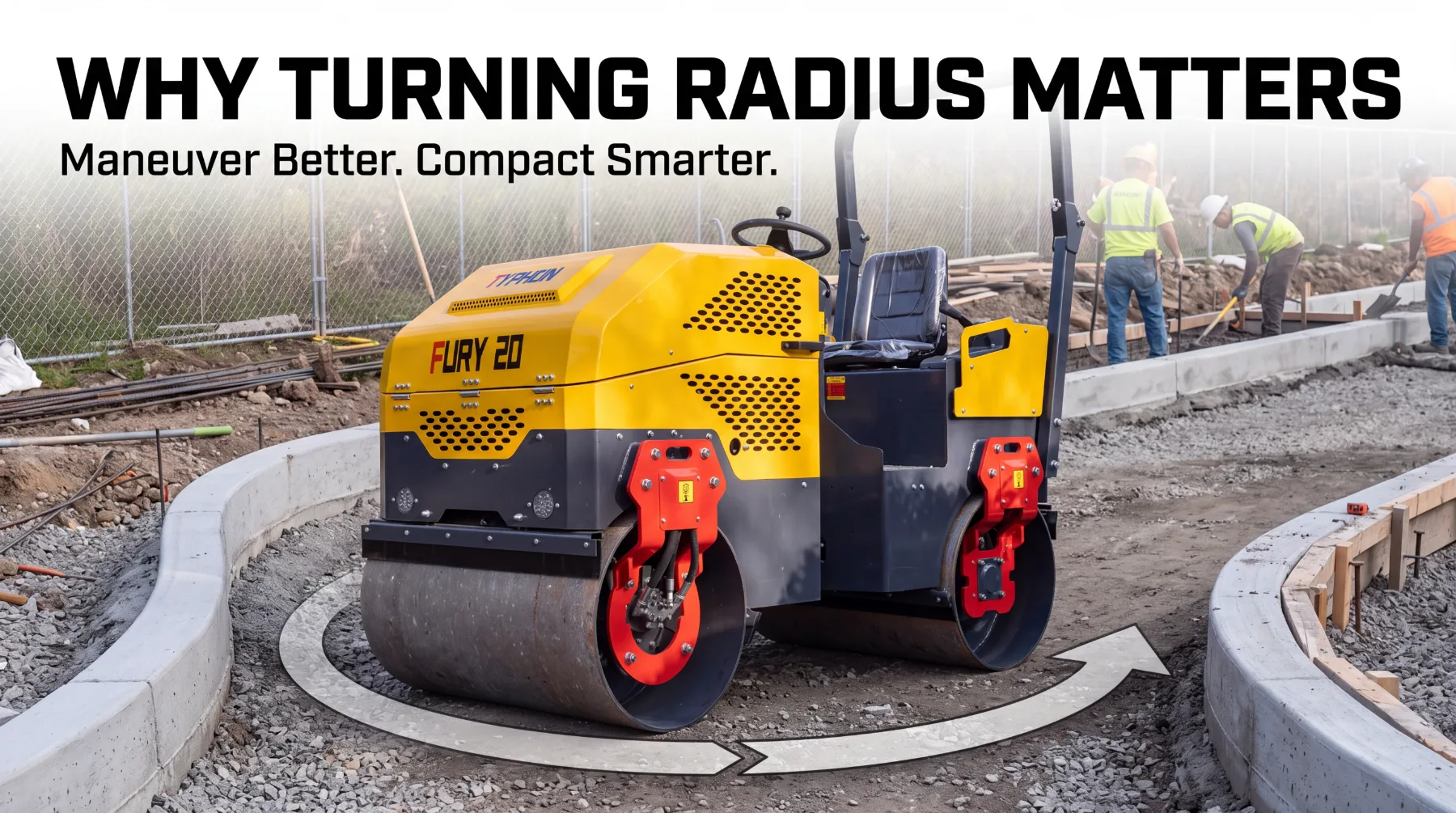
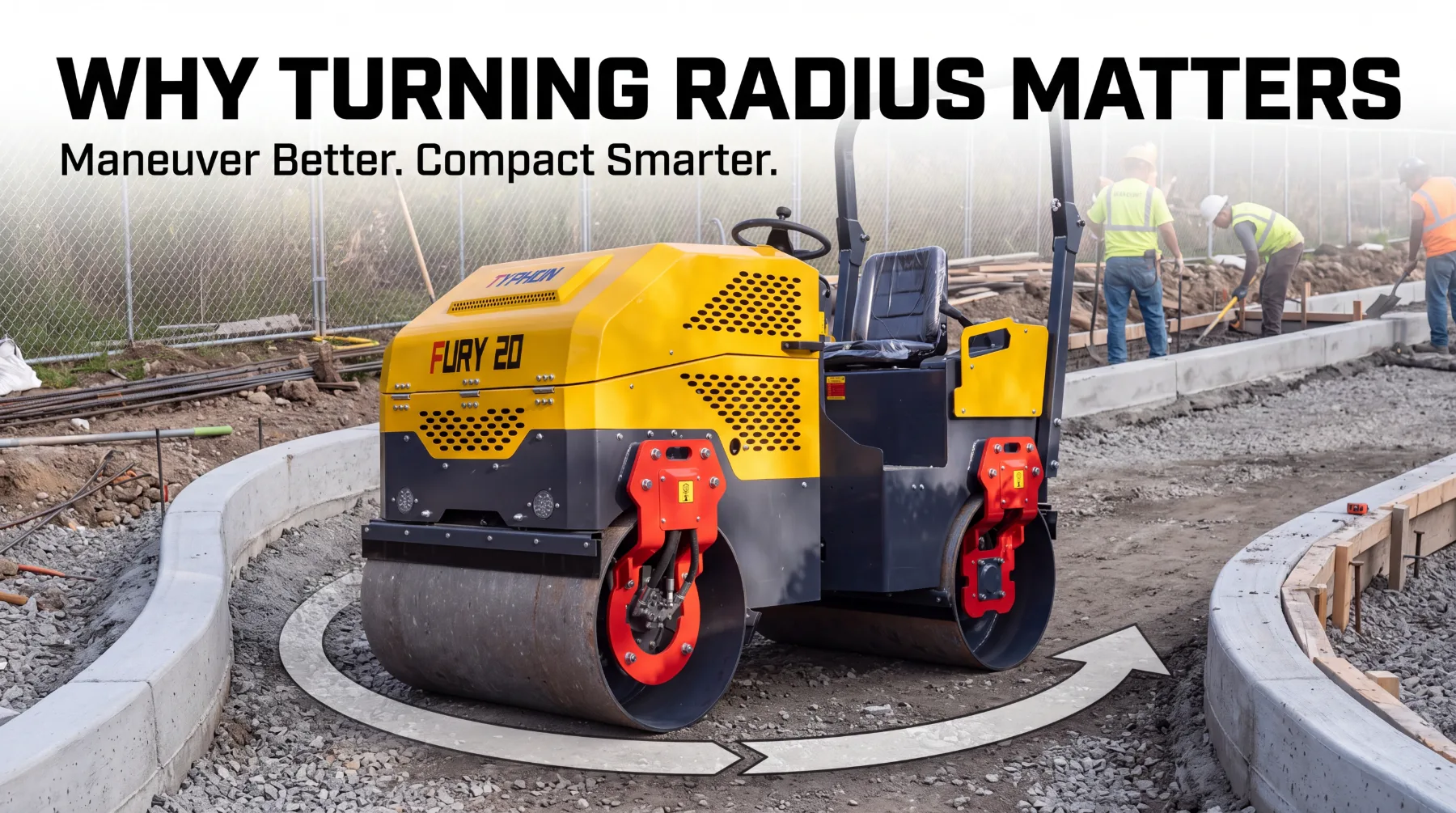 Turning radius rarely gets top billing when buyers compare compact road rollers, yet it quietly shapes how smoothly the machine works on nearly every jobsite. It's the measure of how tightly the roller can pivot and change direction, and it determines whether you glide through a confined project or fight the machine at every turn. On sidewalks, driveways, parking lots, and tight road repairs, a machine that turns cleanly saves time, reduces missed spots, and keeps compaction consistent from edge to edge. A roller that can't maneuver well leaves you repositioning constantly and struggling to reach the areas that matter most. This post breaks down five reasons turning radius deserves close attention when you choose a compact roller, covering maneuverability in tight areas, faster direction changes, working around curves and edges, jobsite access, and how to balance a tight radius against size and stability so you get dependable compaction without compromise.
Maneuverability in Tight Work Areas
A smaller turning radius gives a compact road roller the agility to change direction in spaces where a less nimble machine would stall out. On narrow road sections, in fenced-in lots, or between structures and equipment, the ability to pivot within a confined footprint keeps the work flowing. The roller can adjust its line, reposition for the next pass, and slip around obstacles without demanding wide clearance on every side. That agility is exactly what compact rollers are built for, and turning radius is one of the specifications that makes it real. Tight work areas expose the difference immediately. When you're compacting a narrow trench patch, a service road, or a section bordered by curbs and barriers, a machine with a tight turning radius stays productive where a wider-turning roller would need extra room to swing around. The operator can work close to walls, poles, and parked machinery with confidence, knowing the roller will turn where it needs to rather than forcing awkward multi-point maneuvers. The practical payoff shows up in a few clear ways:
- Working close to obstacles — the roller pivots near curbs, poles, and structures without wide clearance.
- Handling narrow sections — confined road strips and patches stay reachable without repositioning fights.
- Reducing operator strain — tight turns feel natural instead of requiring constant careful maneuvering.
For contractors who regularly work in confined settings, this maneuverability directly affects how efficiently a project moves. A compact roller with a tight turning radius handles cramped, obstacle-filled sites the way it was designed to, keeping the operator focused on quality compaction rather than on wrestling the machine through spaces it barely fits.
Faster Direction Changes
Compaction is repetitive work built on pass after pass, and how quickly the roller changes direction between those passes has a real effect on productivity. A tight turning radius lets the operator reverse, shift lines, and set up the next lane with minimal fuss. Instead of executing wide, time-consuming turns at the end of each pass, the machine pivots cleanly and gets back to compacting. Across a full shift, those saved seconds add up into meaningful gains in output. The advantage comes from reduced repositioning. When a roller turns tightly, the operator doesn't have to reverse and jockey the machine into place before starting the next run. The roller comes around, lines up, and continues, keeping a steady rhythm from one section to the next. That smooth flow matters most on jobs with many short passes, where every turn interrupts the work and a clumsy turning radius multiplies the wasted motion. This steady workflow also supports better compaction quality. Frequent stopping, reversing, and repositioning can create uneven overlap between passes and leave inconsistent coverage. A machine that transitions smoothly between passes helps the operator maintain even, overlapping coverage, which is what produces a uniform, well-compacted surface. When the machine cooperates through each direction change, the operator can concentrate on pattern and overlap rather than on fighting the geometry of every turn. For projects measured in tight timelines and finished quality, faster direction changes translate into a machine that simply gets more done in less time. A compact roller with a tight turning radius moves through its pattern efficiently, cuts the downtime between passes, and helps the crew keep the whole job on schedule without sacrificing the consistency the finished surface demands.
Working Around Curves and Edges
Real jobsites are rarely made up of straight, open lanes. Curved paths, rounded edges, and structures that interrupt the surface are the norm, and a roller's turning radius determines how gracefully it handles them. Good maneuverability lets the operator follow a curve smoothly rather than approximating it with a series of short straight passes, which keeps compaction consistent along bends where uneven coverage tends to creep in. Compacting near edges is where a tight turning radius really proves its value. Along curbs, gutters, walls, and pavement edges, the operator needs to bring the drum right up to the boundary and follow it precisely. A machine that turns tightly can track along these edges without overshooting or leaving a strip of unrolled material behind. That precision matters, because edges and transitions are often the first places a finished surface shows weakness if compaction falls short.
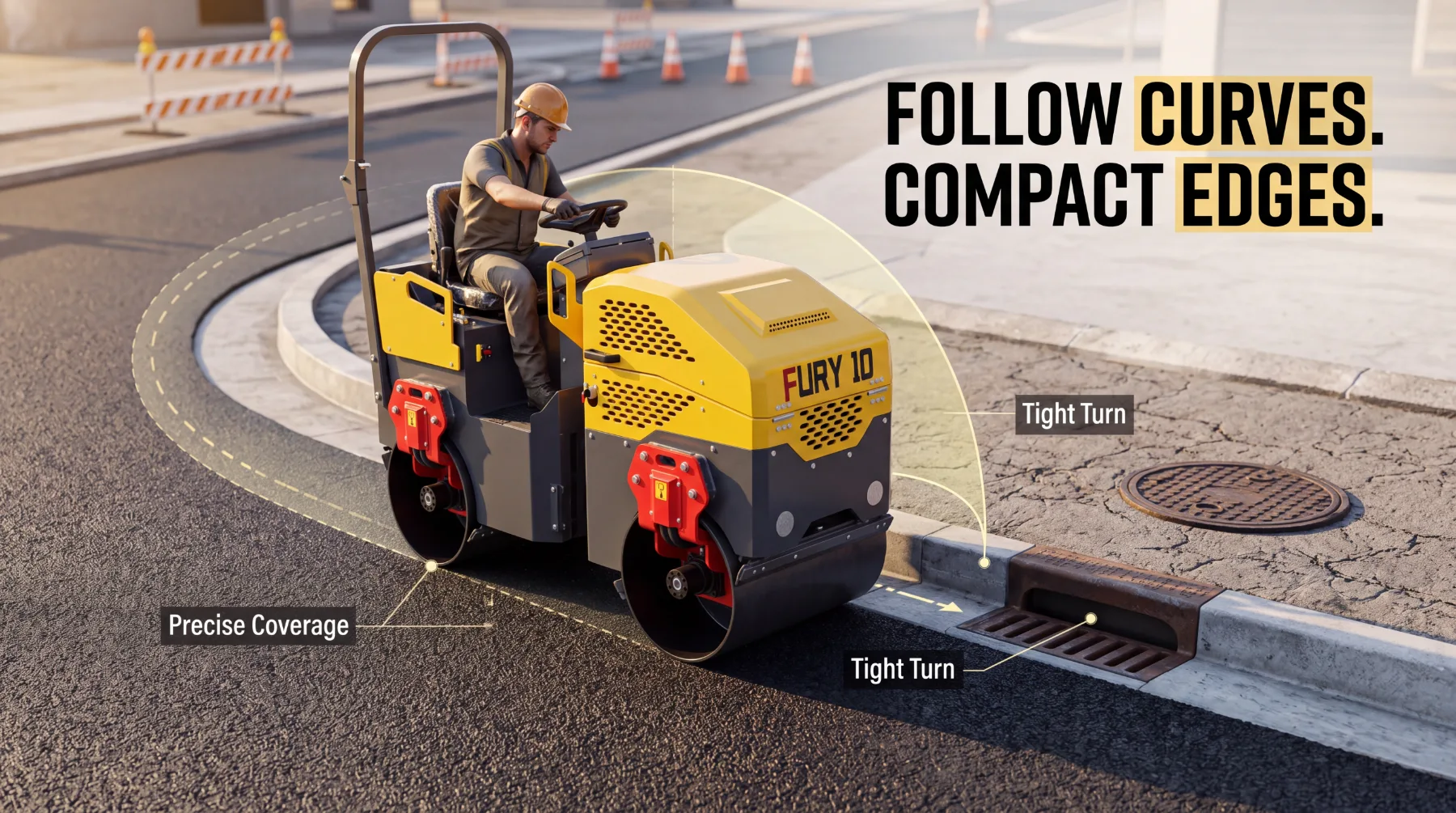 Working around structures adds another layer of demand. Manhole covers, drainage inlets, sign posts, and building corners all interrupt the surface, and the roller has to work around them without leaving gaps. A tight turning radius helps here in several ways:
- Following curves cleanly — the roller tracks bends without breaking the pattern into rough segments.
- Compacting to the edge — the drum stays close to curbs and boundaries, minimizing unrolled strips.
- Navigating obstacles — the machine works around fixtures without leaving uncompacted pockets.
When a roller can follow the actual shape of the work, the operator spends less time patching missed areas by hand or with extra passes. The result is a more uniform, professional finish across curves, edges, and the awkward spots around structures, exactly where good maneuverability separates a capable compact roller from one that leaves gaps behind.
Jobsite Access and Positioning
Before a compact roller can compact anything, it has to get to the work and position itself correctly, and turning radius plays a central role in both. Small construction sites, sidewalks, driveways, and repair areas often present narrow entry points, gates, and tight approaches. A roller that turns sharply can enter and exit these spaces with far less trouble, threading through openings and around obstacles that would leave a wider-turning machine stuck or forced into difficult multi-point maneuvers. Positioning on the site is just as important as getting there. Once inside a confined area, the operator needs to line the roller up with the surface to be compacted, and a tight turning radius makes that setup quick and precise. On a driveway repair or a short sidewalk section, there's simply no room for broad turns, so a machine that can pivot in place or within a small footprint lets the operator get to work almost immediately instead of spending time inching into position. This access advantage matters most on the kinds of jobs compact rollers are chosen for in the first place. Urban repairs, residential work, and utility patches all tend to happen in cramped conditions surrounded by curbs, structures, and finished surfaces the crew needs to protect. A machine that maneuvers well can reach the work without risking contact with nearby features, and it can leave the same way once the job is done. That ease of movement keeps the whole operation efficient, from unloading the roller to the final pass. When a compact roller enters, positions, and exits confined jobsites smoothly, the crew loses less time to logistics and spends more of it on productive compaction, which is exactly what these machines are built to deliver.
Balancing Size and Stability
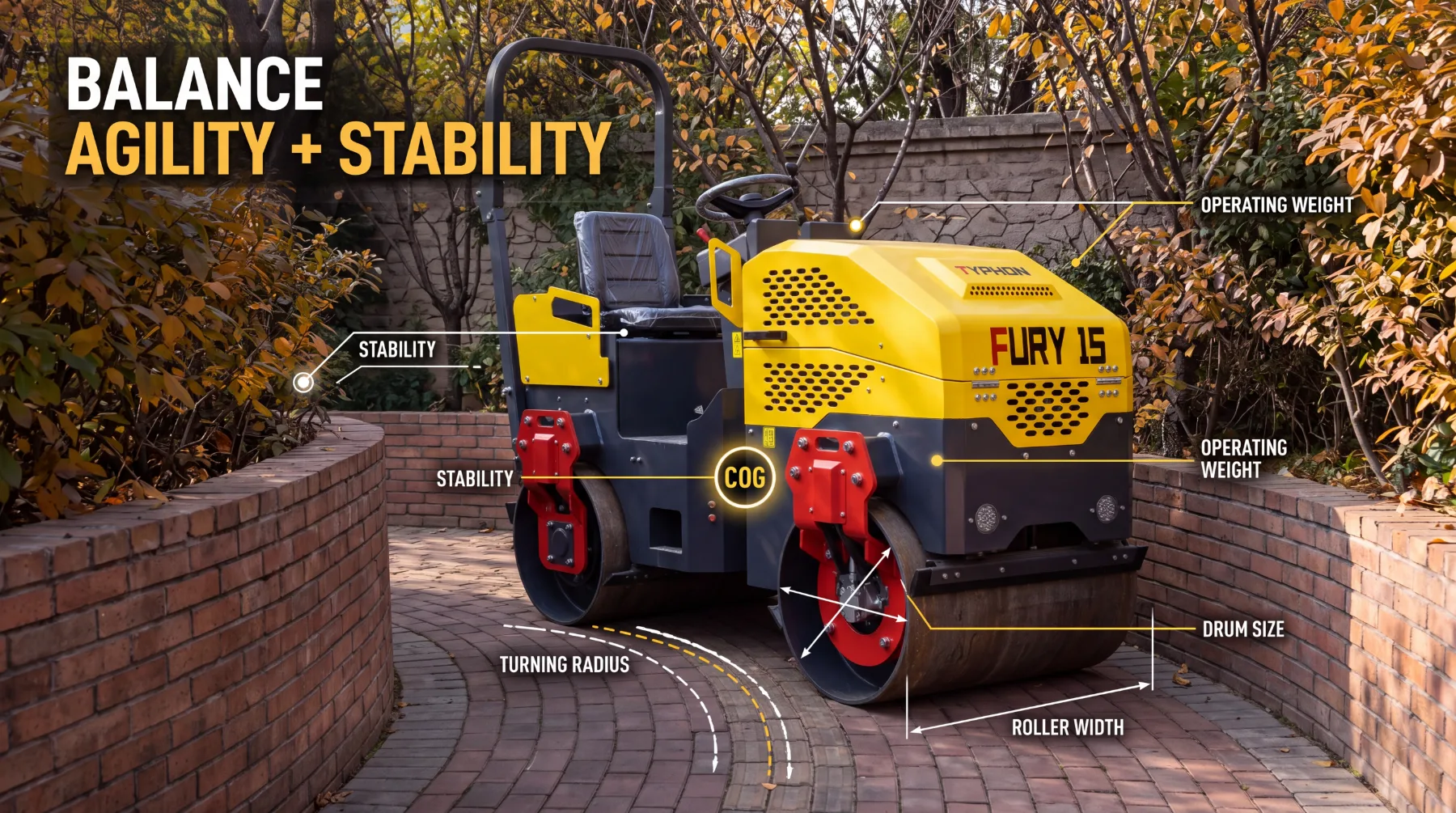 A tight turning radius is valuable, but it should never be the only specification driving your decision. Maneuverability means little if the machine can't deliver the compaction performance the job requires, so turning radius has to be weighed alongside roller width, operating weight, drum size, and overall stability. The best compact roller for your work is the one that balances agility with the force and coverage needed to compact the surface properly. Each of these specifications works together to define what the machine can actually accomplish. Consider how they relate:
- Roller width — determines coverage per pass; too narrow means more passes, too wide limits access.
- Operating weight — drives compaction force; the machine must be heavy enough for the material.
- Drum size — affects both coverage and how the roller handles edges and transitions.
- Stability — keeps the machine safe and consistent on slopes, edges, and uneven ground.
The goal is a machine sized and configured to fit the job without sacrificing results. A roller that turns beautifully but lacks the weight to compact your material properly will leave you making endless passes for a subpar finish. Likewise, a machine chosen purely for compaction force may prove too large and cumbersome for the confined sites where a compact roller earns its keep. Neither extreme serves you well. Matching the machine to the work means thinking about the whole package. Look at the sites you work most often, the materials you compact, and the finish your projects demand, then find the roller whose turning radius, width, weight, drum, and stability all align with those needs. A well-balanced compact roller gives you the maneuverability to work confined sites efficiently and the compaction performance to finish them right, which is the combination that delivers dependable results project after project.
Conclusion
Turning radius shapes far more of a compact road roller's real-world performance than its modest place on the spec sheet suggests. It defines how well the machine maneuvers in tight work areas, how quickly it changes direction between passes, how cleanly it follows curves and compacts to the edge, and how easily it accesses and positions itself on small jobsites. Just as important, turning radius has to be balanced against roller width, operating weight, drum size, and stability so the machine fits the job without giving up compaction quality. No single number tells the whole story, which is why these specifications should always be considered together and matched to the work you actually perform. By understanding how turning radius ties into the rest of the machine, you can choose a compact roller that delivers efficient, dependable compaction across the confined, obstacle-filled sites where these machines prove their worth.
Frequently Asked Questions
1. What is turning radius on a compact road roller, and why does it matter? Turning radius describes how tightly a compact road roller can pivot and change direction. It matters because it directly affects how well the machine maneuvers in the confined spaces these rollers are built for, such as sidewalks, driveways, parking lots, and tight road repairs. A smaller turning radius lets the operator work close to obstacles, follow curves, and reposition between passes with less effort. A wider turning radius forces awkward multi-point maneuvers and wasted motion. For jobs in cramped conditions, turning radius is one of the specifications that most directly shapes how efficiently the machine gets its work done. 2. Does a tighter turning radius really improve productivity? Yes. A tighter turning radius reduces the time and repositioning needed between compaction passes. Instead of executing wide, slow turns at the end of each run, the operator pivots cleanly and lines up the next pass quickly, keeping a steady rhythm across the job. On projects with many short passes, those saved seconds add up to meaningful gains over a shift. Smooth direction changes also help the operator maintain even, overlapping coverage, which supports better compaction quality. So a tight turning radius improves both how much work gets done and how consistent the finished surface turns out. 3. How does turning radius affect compaction near edges and curves? Turning radius largely determines how cleanly the roller can follow curved paths and compact right up to edges. A machine that turns tightly can track along curbs, gutters, and pavement boundaries without overshooting or leaving strips of unrolled material behind. It can also follow bends smoothly rather than approximating them with rough straight segments, which keeps compaction consistent along curves. Working around fixtures like manhole covers and posts becomes easier too. Since edges and transitions are often where a finished surface shows weakness first, good maneuverability helps produce a more uniform, professional result in exactly those trouble spots. 4. Should I choose a compact roller based on turning radius alone? No. Turning radius is important, but it should be weighed alongside roller width, operating weight, drum size, and overall stability. A machine that maneuvers beautifully but lacks the weight to compact your material properly will leave you making endless passes for a poor finish. On the other hand, a roller chosen purely for compaction force may be too large for the confined sites where compact rollers are needed. The best choice balances agility with the coverage, force, and stability the job requires, so you get both easy maneuvering and dependable compaction performance. 5. What types of jobs benefit most from a tight turning radius? Jobs in confined, obstacle-filled settings benefit the most. Urban road repairs, residential driveways, sidewalks, parking lots, utility patches, and work bordered by curbs, walls, and structures all reward a machine that can maneuver in tight spaces. On these sites, narrow entry points and limited room make broad turns impractical, so a tight turning radius helps the roller enter, position, and exit smoothly while compacting close to edges and around fixtures. If your work regularly happens in cramped conditions rather than wide-open lanes, prioritizing turning radius will make a noticeable difference in efficiency and finish quality.
