High Flow Skid Steer Attachment Guide for Maximum Hydraulic Performance
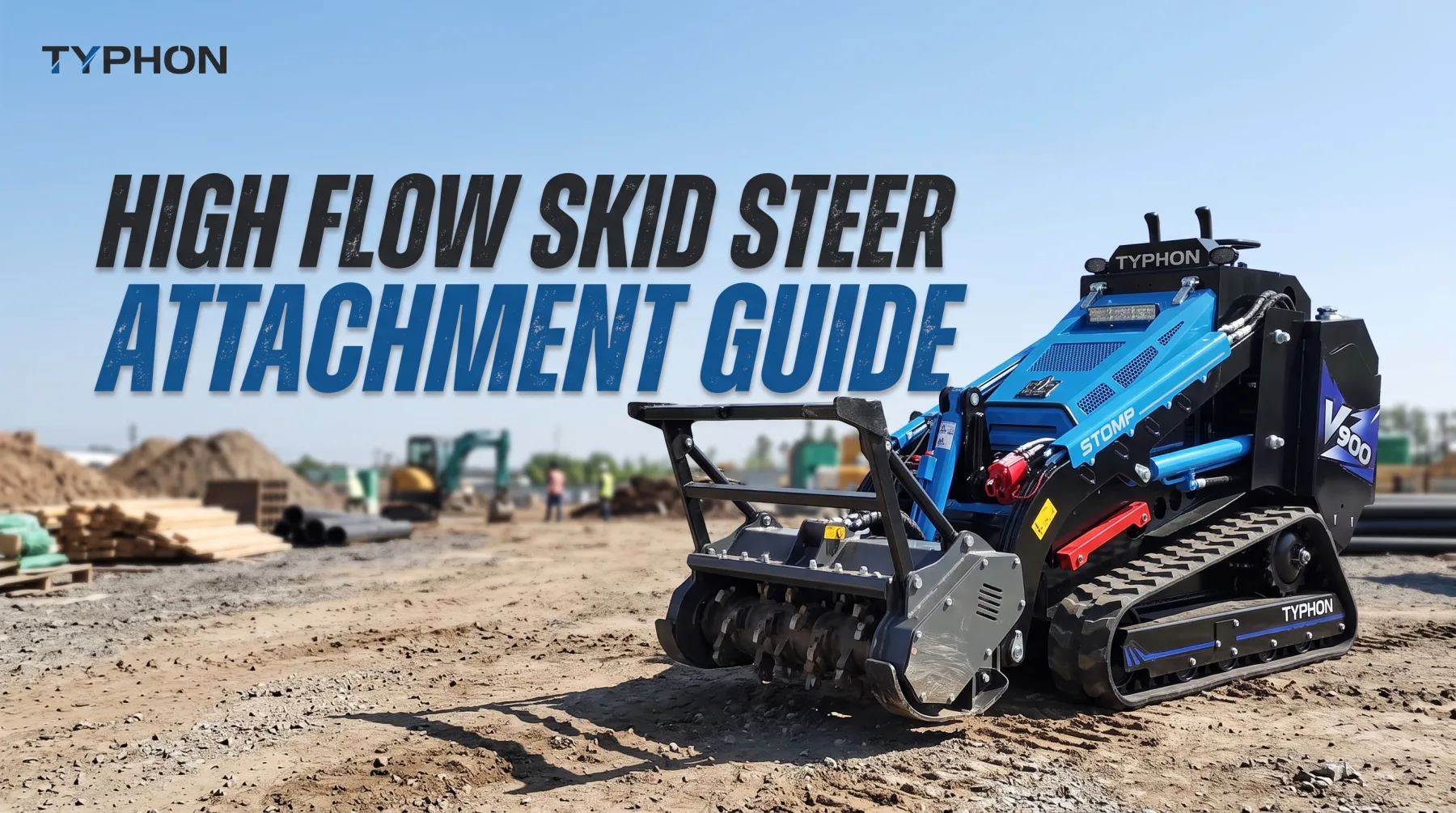
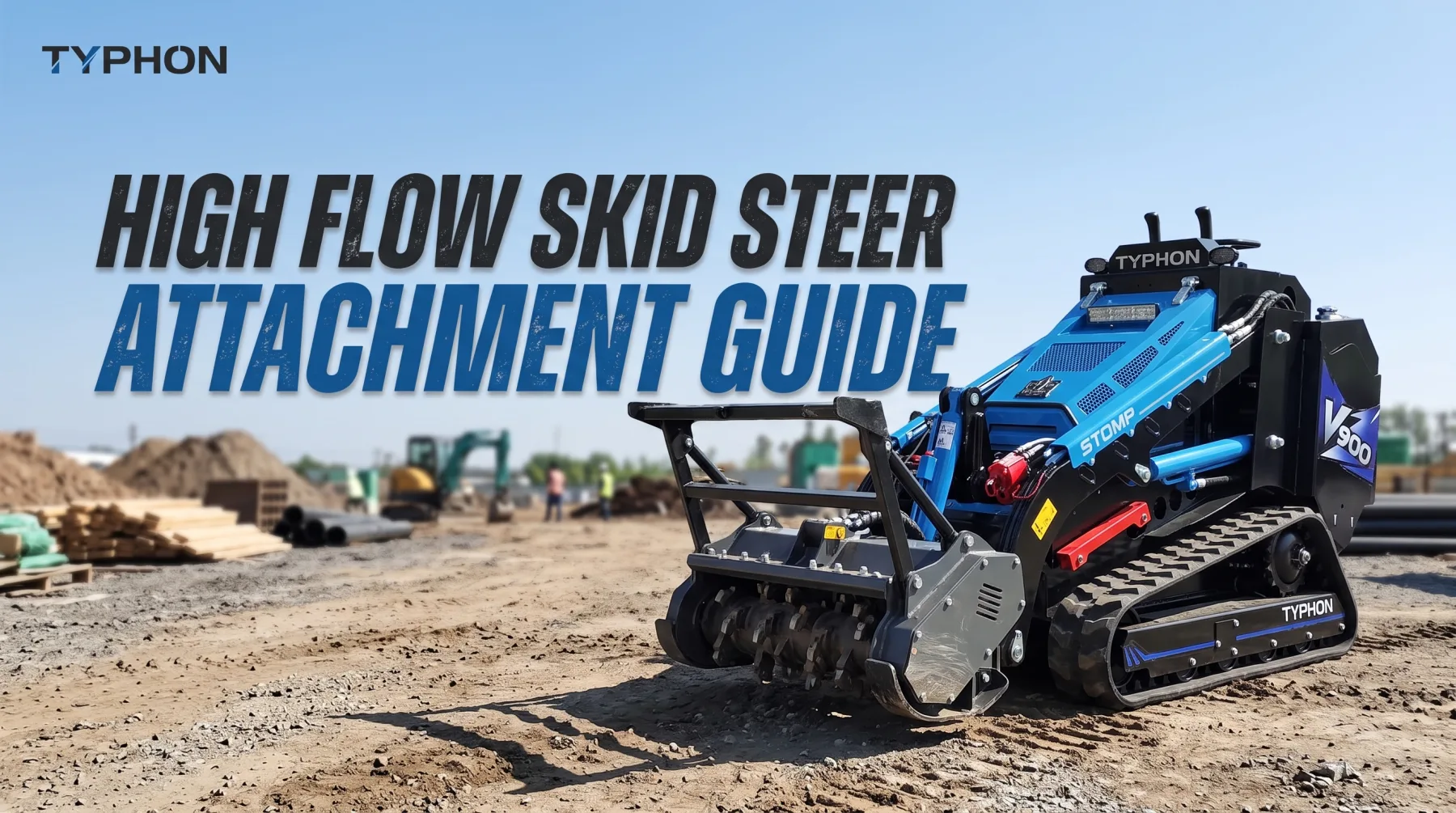
A land-clearing crew shows up to a brush-choked lot with a fresh forestry mulcher and a standard-flow skid steer, ready to knock out a full day of clearing. The operator drops the mulcher into a thick stand of saplings and the head slows to a crawl almost instantly, bogging down every few feet and overheating the hydraulics by mid-morning. What should have been a one-day job stretches into three, the mulcher never runs the way its spec sheet promised, and the client starts asking hard questions. Nothing was broken. The machine simply couldn’t feed the tool the flow it needed. That mismatch costs the crew real money, and it’s exactly the kind of mistake a guide like this exists to prevent — because the best attachment in the world underperforms when the hydraulics behind it fall short.
High flow capability is what separates a skid steer that merely runs an attachment from one that runs it at full power. Standard-flow machines handle plenty of everyday tools with no trouble at all, but demanding attachments like forestry mulchers, cold planers, and large hydraulic hammers need far more hydraulic volume to work the way they were designed. Many operators don’t realize the gap until they’re already on the job, stuck with a machine that’s underpowered for the tool it’s supposed to be running. This guide breaks down what high flow hydraulics actually are, which attachments genuinely require them, how to match GPM and PSI to a tool’s specs, the common mistakes that quietly wreck performance and shorten equipment life, and the real return high flow delivers for crews taking on tougher work. Here’s how to get maximum performance out of every tool you run.
What High Flow Hydraulics Are and How They Differ From Standard Flow
Every skid steer sends hydraulic fluid to its attachments through an auxiliary circuit, and the volume of that flow determines how much work a tool can do. Standard-flow machines typically deliver somewhere in the range of 17 to 24 gallons per minute (GPM), which powers buckets, grapples, augers, and most common attachments without trouble. For the day-to-day work that fills most crews’ schedules, that flow rate is more than adequate and rarely causes problems.
High flow changes the equation entirely by pushing far more fluid through the same circuit, often 30 to 40 GPM or more, at similar or higher operating pressure. More volume means more hydraulic horsepower reaching the attachment, which is exactly what a power-hungry tool needs to spin a heavy drum at full speed or drive a cutting head through tough material without slowing. Think of it like water through a garden hose versus a fire hose: a standard-flow circuit trickles enough for light work, while a high-flow circuit opens the line wide so demanding tools get the sustained power they were built around.
The practical difference shows up instantly on the job. A forestry mulcher running on proper high flow chews through brush at its rated pace. That same mulcher on a starved standard-flow circuit bogs in every thick patch, runs hot, and delivers maybe half the output. Understanding this difference is essential before you invest in any heavy attachment, since flow rate is the single spec that determines which tools your machine can genuinely run versus merely turning over at reduced speed.
Which Attachments Require High Flow
Not every attachment needs the extra volume, but the heavy hitters absolutely do. Tools that run a continuously spinning drum, wheel, or high-demand hydraulic motor rely on sustained flow that standard flow simply can’t sustain for an entire shift. Running these on a low-flow machine leaves them starved from the first pass, and the problem gets worse as the hydraulic system heats up.
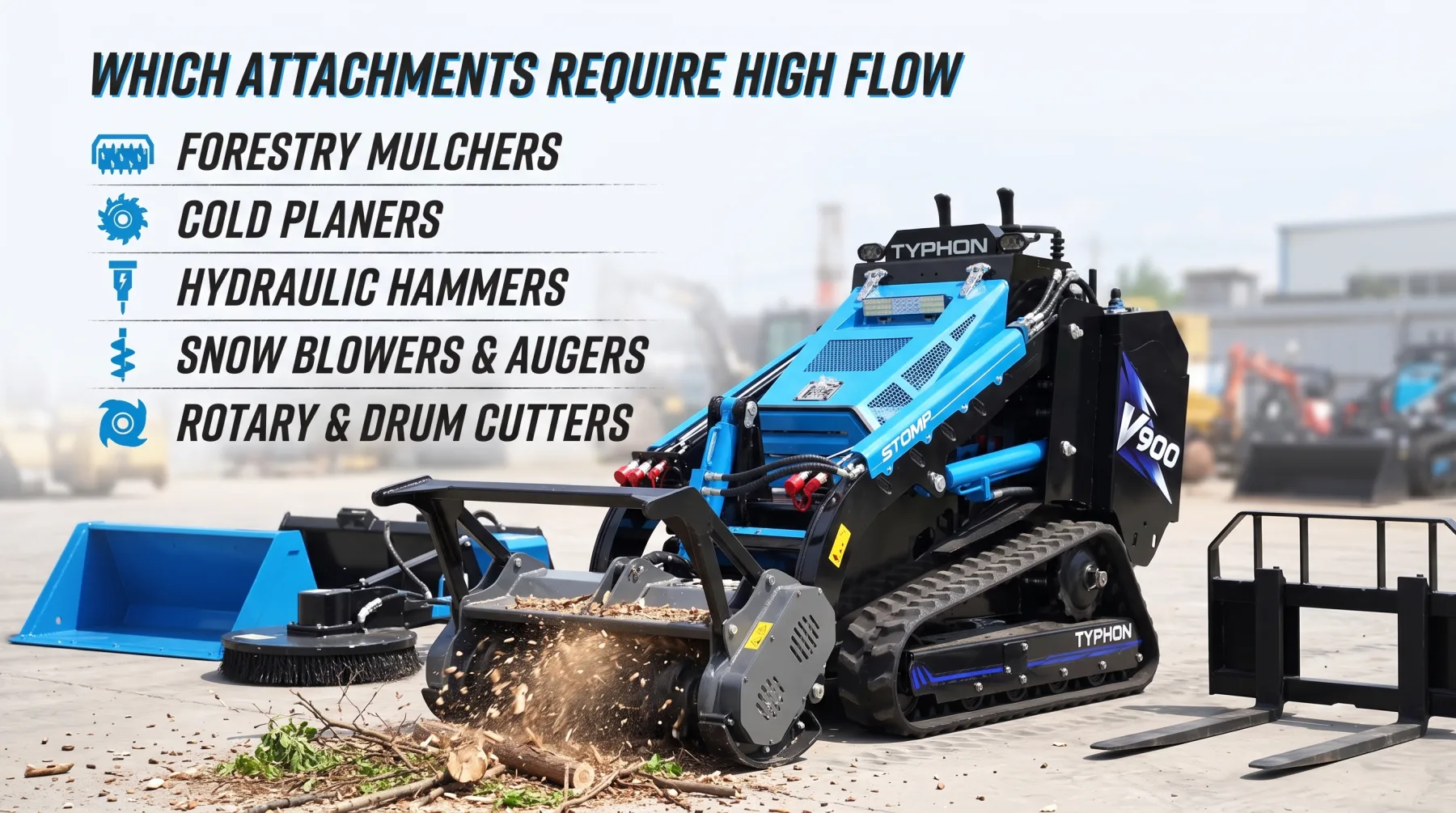
Here’s a look at the attachments that consistently call for high flow:
- Forestry mulchers: Grinding brush, saplings, and small trees demands a heavy, fast-spinning drum that runs continuously through dense material. That drum needs high flow to keep cutting speed up instead of stalling every few feet in thick growth.
- Cold planers: Milling asphalt and concrete requires steady, sustained power to drive the cutting drum through a hard surface at a controlled pace. A starved planer digs slowly, leaves an uneven cut, and forces the crew back for extra passes.
- Hydraulic hammers (breakers): Larger breakers depend on strong, consistent flow to deliver full impact energy at rated frequency. Underpowered flow weakens every blow and turns a half-day demo job into a full one.
- Snow blowers and large augers: High-capacity snow blowers moving wet, heavy snow and heavy-duty augers drilling through frozen or rocky ground both lean on high flow to keep the motor turning under sustained load.
- Rotary and drum cutters: Trenching and grinding tools with spinning cutting heads need the sustained hydraulic volume high flow provides to work at their rated speed and depth.
Lighter tools like standard buckets, pallet forks, and smaller single-speed augers run fine on standard flow, and there’s no benefit to pushing more fluid through them than they need. The key is matching the requirement to the specific tool rather than assuming everything needs the high-flow upgrade. Checking each attachment’s flow rating in the manufacturer’s spec sheet tells you exactly what it demands before you ever couple it up, and that five-minute check can save you a wasted day on the job.
How to Match GPM and PSI to Attachment Specs
Getting maximum performance out of any high-flow tool comes down to pairing the machine’s actual output with the tool’s specific requirement, and two numbers drive that match. GPM measures the volume of hydraulic fluid flowing to the attachment each minute, while PSI, or pounds per square inch, measures the pressure behind that flow. A tool needs both figures in the right range to run as designed, and checking one without confirming the other tells only half the story.
Start with the attachment’s rated flow range, then confirm your machine’s auxiliary circuit delivers within it. Every high-flow tool lists both a minimum and a maximum GPM in its documentation. Running below the minimum starves the attachment and kills performance, while exceeding the maximum can overheat seals, damage the tool’s motor, or void the manufacturer’s warranty. Pressure follows the same logic: a tool rated for a certain operating PSI needs the machine to match it, or the attachment loses power and efficiency under real working load.
Match both figures together, leave a sensible margin rather than pushing either one right to the edge, and the tool performs the way its maker intended. One habit worth building into your process before every new attachment purchase: write down your machine’s exact auxiliary flow rate and operating pressure and keep those numbers handy when you’re shopping. That simple step prevents the expensive and frustrating mistake of buying a tool your skid steer can’t properly feed. Sizing the machine and the attachment together, then confirming both against your real workload, keeps every pairing productive and the whole system working as one unit instead of fighting itself.
Common Mistakes When Running High-Demand Tools on Low-Flow Machines
Plenty of experienced crews learn the hard way that a demanding attachment on a standard-flow machine causes far more than just slow work. The most common and costly mistake is assuming any skid steer can run any tool as long as the coupler physically fits and locks. It fits, sure, but that connection doesn’t mean the machine can supply the hydraulic volume the tool actually needs to function. The attachment bogs down, struggles under load, overheats, and never delivers anywhere close to its rated output.
Overheating is where real mechanical damage starts. Forcing a high-demand tool to draw more flow than the machine can spare builds heat in the hydraulic system rapidly, and sustained heat breaks down fluid viscosity, wears out seals, and shortens the working life of pumps and hydraulic motors throughout the machine. A costly error worth naming explicitly: pushing a starved mulcher or cold planer through tough material shift after shift, week after week, which quietly cooks the hydraulics on both the skid steer and the attachment itself, leading to repair bills that dwarf the cost of simply having the right machine from the start.
Another frequent and equally expensive slip is ignoring the PSI requirement entirely and focusing only on GPM. A tool that gets enough flow volume but not enough operating pressure still runs weak under load, still bogs when conditions get tough, and still damages itself from working outside its design parameters. Both specs matter, and shortchanging either one has real consequences.
Watch for the warning signs and respond before they turn into major repairs. A tool that slows sharply the moment it hits material, hydraulic fluid running hotter than normal, a machine that strains noticeably just to keep an attachment turning at speed, and unusually high fluid consumption all point directly to a flow or pressure mismatch. Stay within the machine’s rated limits on every job, follow safe operating practices, and treat a mismatch warning as a real problem to fix rather than an inconvenience to push through. Respect the numbers and you protect the investment; ignore them and any machine, regardless of brand or price, wears out far ahead of schedule.
Value and ROI for Crews Adding High Flow Capability
Cost is always the first question any contractor asks seriously, and a high-flow skid steer or factory high-flow upgrade does carry a noticeably higher price than a comparable standard-flow setup. That premium has to earn its keep somewhere clear, and it does so through the range of work it unlocks. Adding high flow lets one machine run forestry mulchers, cold planers, and heavy breakers that a standard-flow unit simply cannot power effectively, opening the door to land clearing, asphalt milling, and demolition contracts that were previously out of reach.
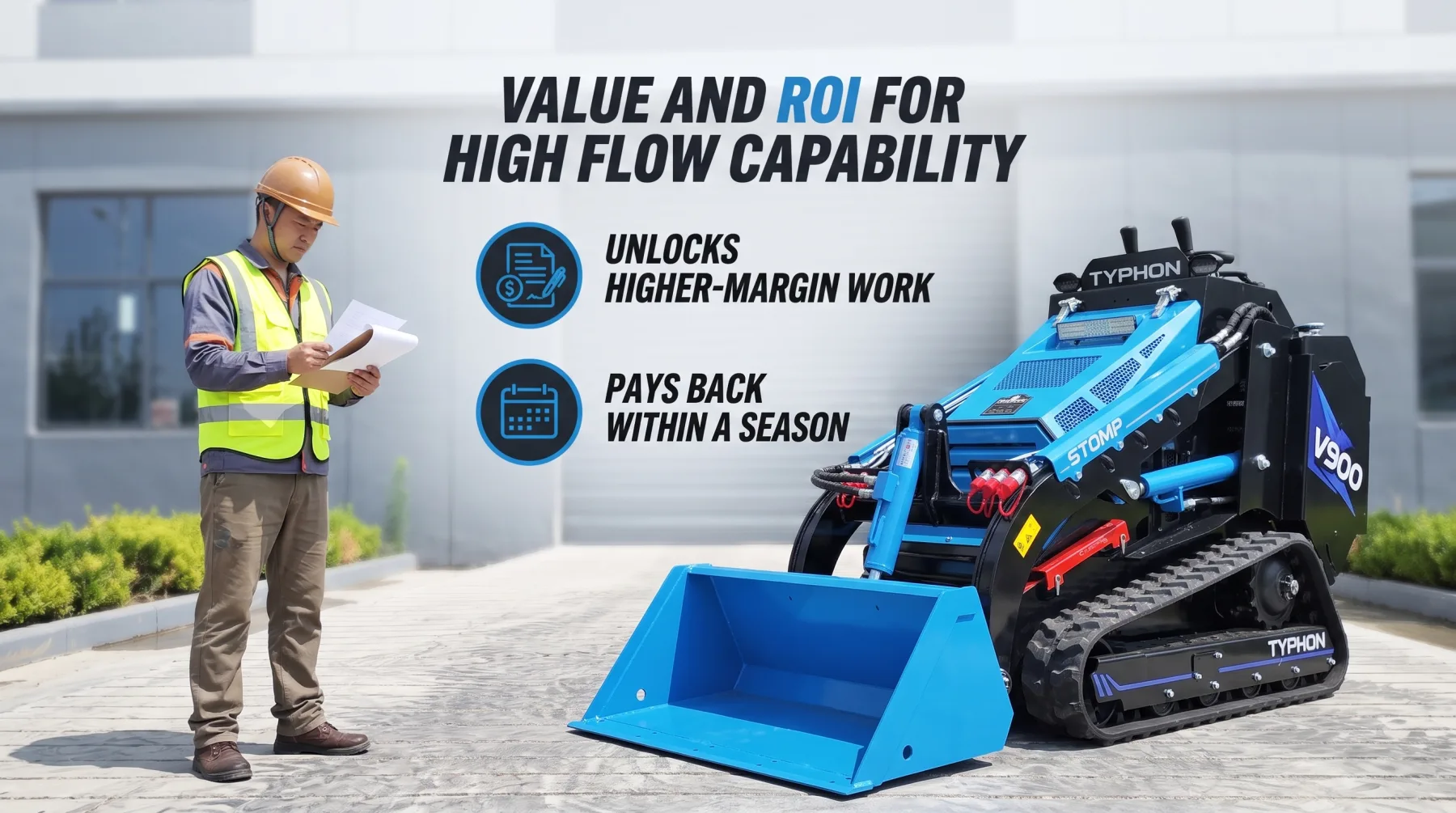
Revenue follows capability, and that’s the whole case for the upgrade. Every high-demand attachment you can now run at full power turns into a service you can bid on and bill for. A crew that adds high flow frequently expands into higher-margin work rather than turning it down or subcontracting it out, and faster, fuller-power performance also means finishing those tougher jobs in less time per site, which stretches one operator across more billable work in a single day.
Whether the upgrade pays off comes down to frequency. For crews doing steady clearing, milling, or breaking work across a full season, high flow typically recoups its premium cost within a year and keeps saving after that. Operations that face high-demand attachment work only occasionally may find renting a high-flow machine for specific jobs a smarter fit than buying one outright. Either way, protecting the investment takes a steady hydraulic maintenance routine that keeps the fluid clean, the seals healthy, and the flow where it belongs. A high-flow machine that’s well maintained stays productive for years; one that’s neglected loses its advantage fast.
Conclusion
Getting maximum hydraulic performance from a skid steer comes down entirely to matching flow and pressure to the tools you actually run. Standard-flow machines handle everyday attachments well and cover most of what a general crew needs from day to day. But demanding tools like forestry mulchers, cold planers, hydraulic hammers, and heavy augers need the extra volume that only high flow delivers, and running them on a starved machine is a losing proposition from the first pass. Confirm every attachment’s GPM and PSI range against your machine’s real auxiliary output, leave a sensible margin on both numbers, and never assume a tool will run properly just because the coupler fits. Avoid the costly trap of pushing a high-demand attachment on an underpowered circuit, since that mismatch overheats the hydraulics and shortens the life of both the machine and the tool faster than almost any other mistake. Value follows the work you unlock, so crews taking on steady clearing, milling, or breaking recoup the higher upfront cost fastest. Match the machine to the tools you run most, keep the hydraulic system on a clean, regular maintenance routine, and when you’re ready to put a dependable high-flow skid steer to work, reach out to a trusted equipment specialist who can pair a reliable machine with the results your projects depend on.
Frequently Asked Questions
What is the difference between standard flow and high flow on a skid steer? Standard flow typically delivers around 17 to 24 GPM, which powers buckets, grapples, and most common tools without issue, while high flow pushes 30 to 40 GPM or more to supply the sustained hydraulic power that demanding attachments need to run at full performance.
Which attachments need a high flow skid steer? Tools with continuously spinning drums or high-demand hydraulic motors, such as forestry mulchers, cold planers, larger hydraulic hammers, high-capacity snow blowers, and heavy augers, need high flow to work as designed, while lighter tools like standard buckets and pallet forks run fine on standard flow.
What happens if I run a high flow attachment on a standard flow machine? The tool gets starved of the hydraulic volume it needs, so it bogs down under load, works far below its rated output, and overheats the hydraulic system, which breaks down fluid and wears seals, pumps, and motors over time, causing damage to both the machine and the attachment.
